Snakes in Texas
Here are common snakes found in Texas, including 8 venomous species to watch for. Tap any snake for a full identification profile.
Venomous snakes in Texas
 Venomous
Copperhead
Agkistrodon contortrix
Responsible for more venomous snakebites than any other US species, but its bite is rarely fatal. Excellent camouflage in leaf litter leads to surprise encounters.
 Venomous
Cottonmouth (Water Moccasin)
Agkistrodon piscivorus
A semi-aquatic pit viper named for the white interior of its mouth, which it gapes as a warning. The only venomous water snake in North America.
 Venomous
Eastern Coral Snake
Micrurus fulvius
A relative of cobras with potent neurotoxic venom. Famous for the rhyme 'red touches yellow, kill a fellow' that separates it from harmless mimics.
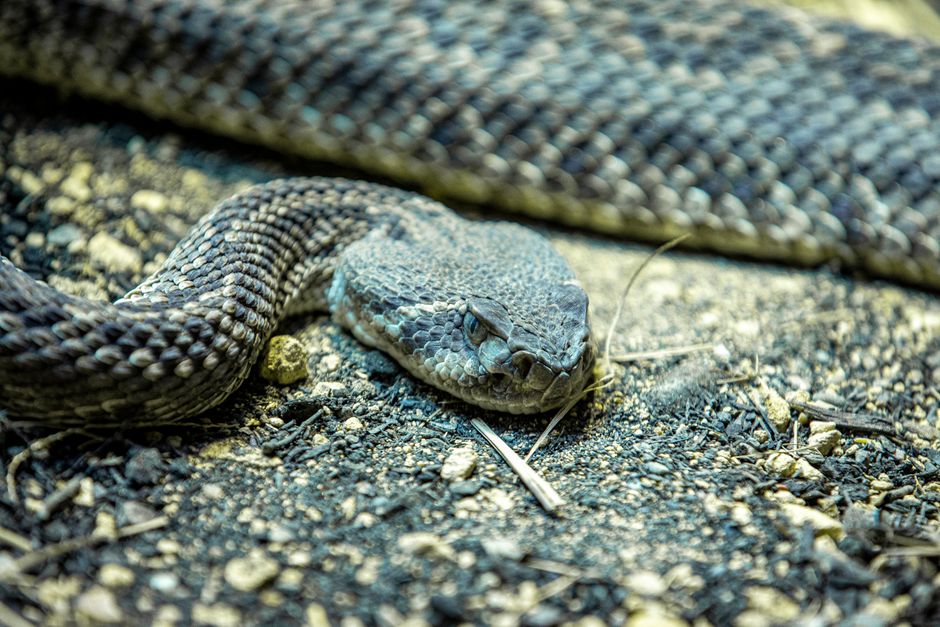 Venomous
Western Diamondback Rattlesnake
Crotalus atrox
The classic Western rattlesnake responsible for the most snakebite deaths in the US. Recognizable by the black-and-white 'coon tail' banding above the rattle.
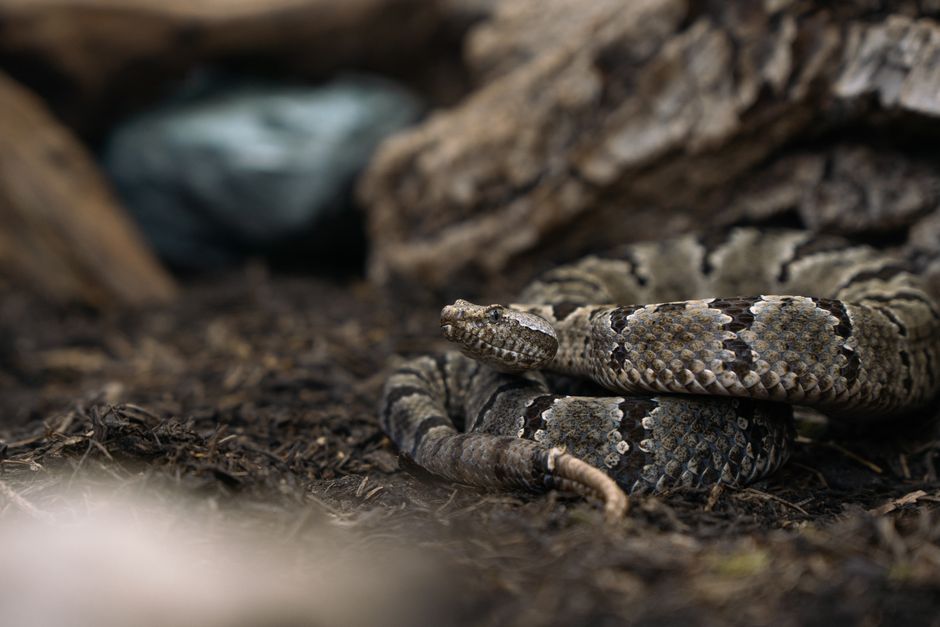
 Venomous
Timber Rattlesnake
Crotalus horridus
A large forest rattlesnake of the eastern US with a calm temperament but highly potent venom. Often confused with the harmless Eastern Ratsnake.
 Venomous
Prairie Rattlesnake
Crotalus viridis
The classic rattlesnake of the Great Plains. Well-camouflaged in dry grass, with a potent venom that makes it the main medically significant snake across the central US.
VenomousMojave Rattlesnake
Crotalus scutulatus
Often considered the most dangerous rattlesnake in the US because of its potent neurotoxic-plus-hemotoxic venom. Looks much like a diamondback but with subtle differences.
 Venomous
Pygmy Rattlesnake
Sistrurus miliarius
A small but venomous pit viper with a rattle so tiny it sounds like a buzzing insect. Bites are painful but rarely life-threatening due to the small venom yield.
Harmless snakes in Texas
 Non-venomous
Gopher Snake
Pituophis catenifer
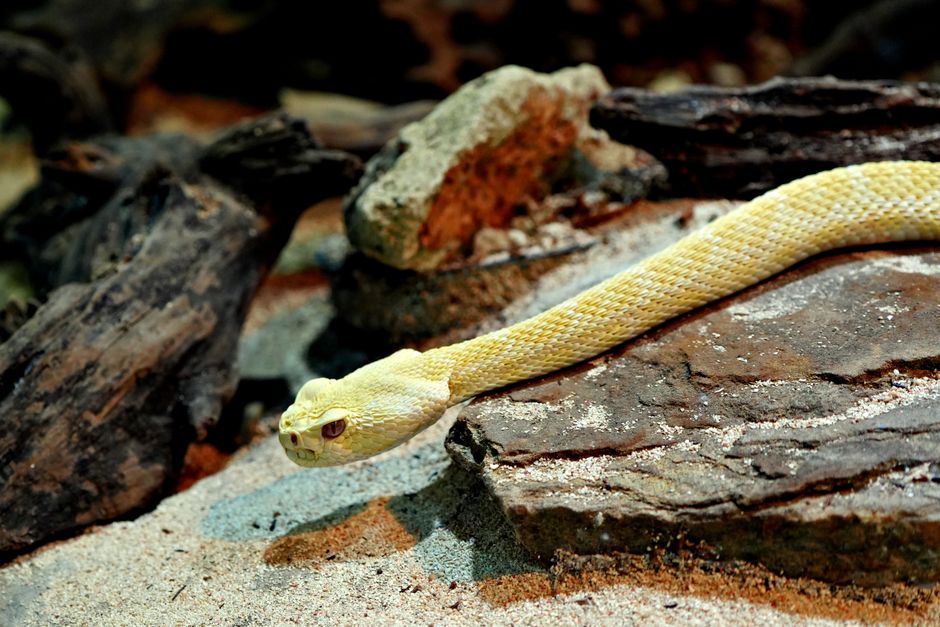
A large harmless constrictor that imitates a rattlesnake by hissing loudly, flattening its head and vibrating its tail. No rattle and round pupils give it away.
 Mildly venomous
Eastern Hognose Snake
Heterodon platirhinos
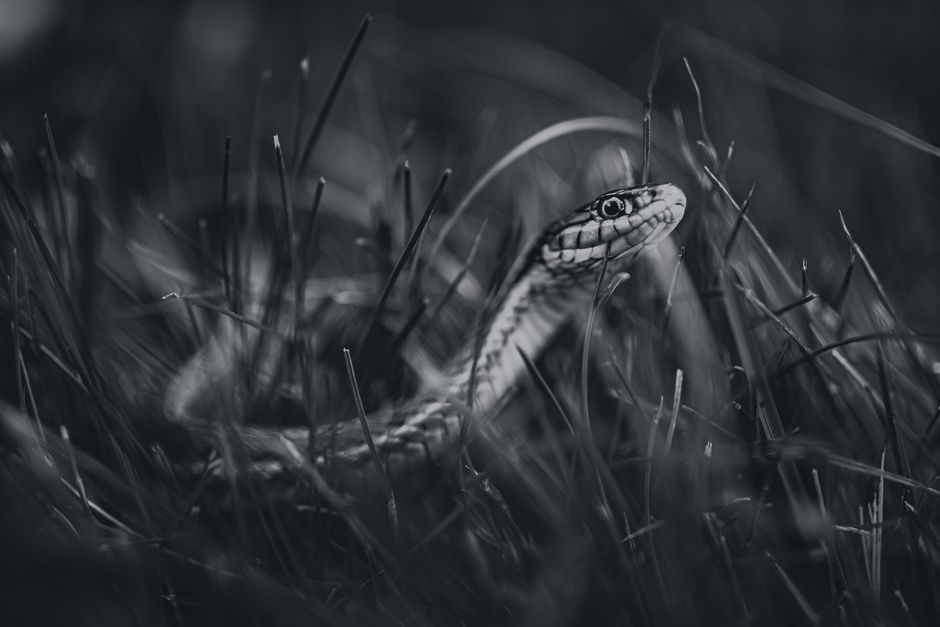
A harmless toad-eater famous for its theatrics — it hisses, flattens its neck like a cobra, then flips over and plays dead. Rear-fanged with toxin that affects only amphibians.
 Non-venomous
Black Racer
Coluber constrictor
A slender, fast, harmless snake that flees at high speed when disturbed. Often mistaken for something dangerous because of its dark color and nervous, alert behavior.
 Non-venomous
Rough Green Snake
Opheodrys aestivus
A gentle, bright-green insect-eater that lives in bushes and is almost impossible to see against leaves. One of the most harmless snakes in North America.
 Mildly venomous
Ring-necked Snake
Diadophis punctatus
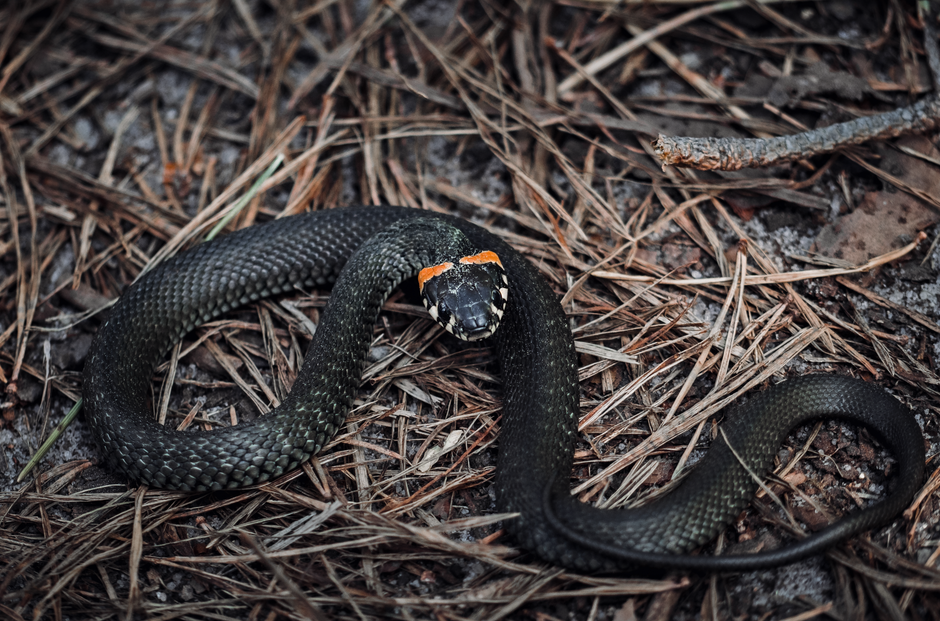
A tiny, secretive snake with a bright neck ring and a vivid orange-yellow belly it curls to flash when threatened. Harmless to people despite mild rear-fanged saliva.
 Non-venomous
Coachwhip
Masticophis flagellum
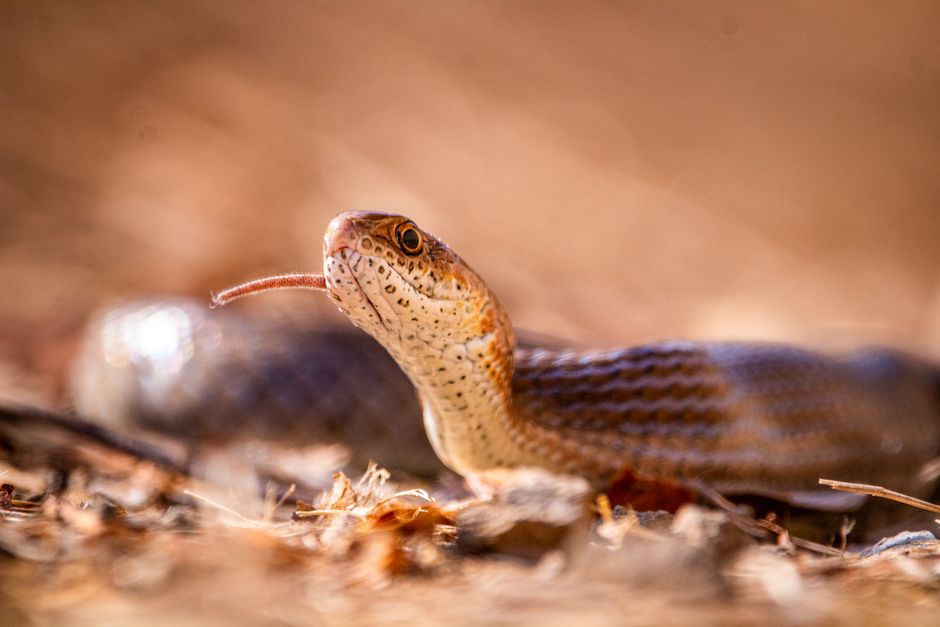
One of the fastest snakes in North America, named for its braided whip-like tail. Harmless, but its speed and alertness startle people. The 'chases you' myth is just it fleeing.
Mildly venomousWestern Hognose Snake
Heterodon nasicus
A small, stocky, theatrical snake and a wildly popular pet. It hisses, flattens its neck and plays dead — but is essentially harmless to humans.
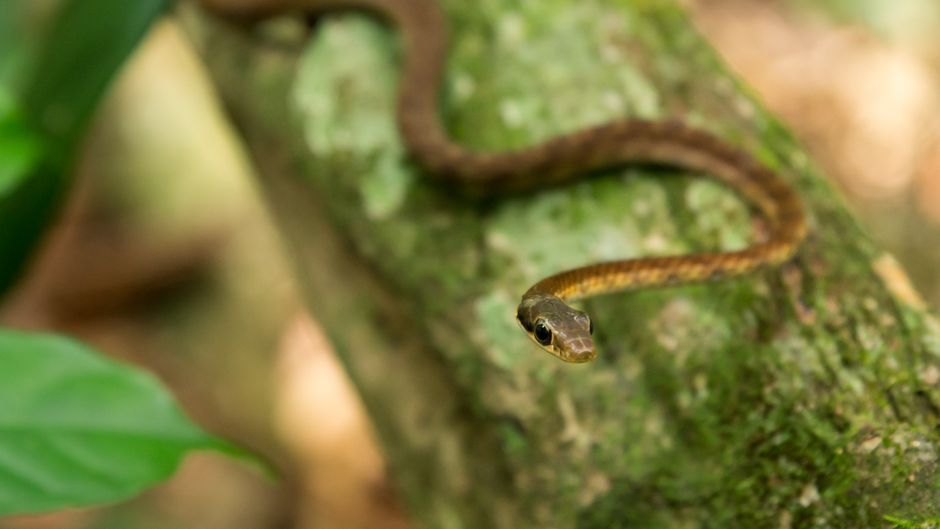 Non-venomous
DeKay's Brownsnake
Storeria dekayi
A tiny, gentle brown snake that thrives in cities and backyards. Frequently found under stepping stones and flowerpots, and completely harmless.
Identifying snakes in Texas
Knowing your location is one of the most powerful tools in snake identification. Many snakes look similar, but the species actually present in Texas narrows the possibilities dramatically. When you use our snake identifier, factor in your state to boost confidence — and if you ever spot a snake you can't identify, treat it as potentially dangerous and keep your distance.