Green Anaconda
Eunectes murinus · Boidae
Also called: Anaconda, Water Boa
The heaviest snake on earth and one of the longest. Non-venomous, it kills by constriction and spends most of its life in water where its bulk is supported.
What the Green Anaconda looks like
How to identify it
- 1Massive olive-green body with paired black oval spots
- 2Eyes and nostrils set high on the head for lurking underwater
- 3Enormous girth — heavier than any other snake
- 4Yellow-and-black scale pattern on the tail underside
Snakes it's confused with
Slimmer, more terrestrial, with bold reddish tail saddles.
Behavior & danger to humans
Shy of humans but immensely powerful; attacks on people are very rare.
✓ Good news: Non-venomous. A powerful constrictor best observed from a distance.
Related snakes
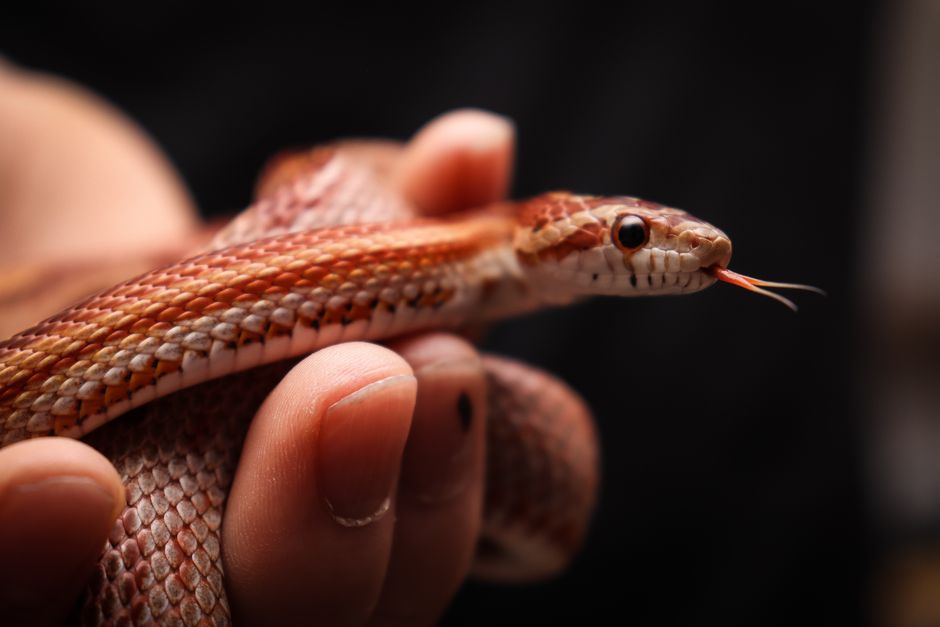 Non-venomous
Corn Snake
Pantherophis guttatus
A harmless, beneficial constrictor and one of the most popular pet snakes in the world. Frequently mistaken for the venomous copperhead.
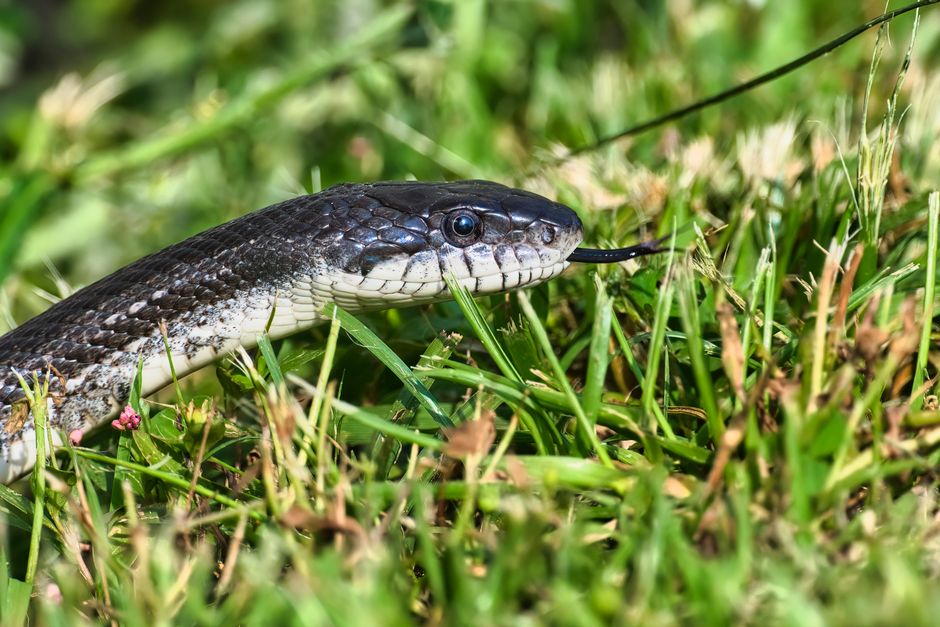 Non-venomous
Eastern Ratsnake
Pantherophis alleghaniensis
A large, harmless constrictor and one of the best natural rodent controllers around homes and farms. Juveniles are gray and blotched, leading to copperhead confusion.
 Non-venomous
Northern Watersnake
Nerodia sipedon
A harmless aquatic snake constantly killed out of fear that it is a cottonmouth. It bites readily when grabbed but has no venom.
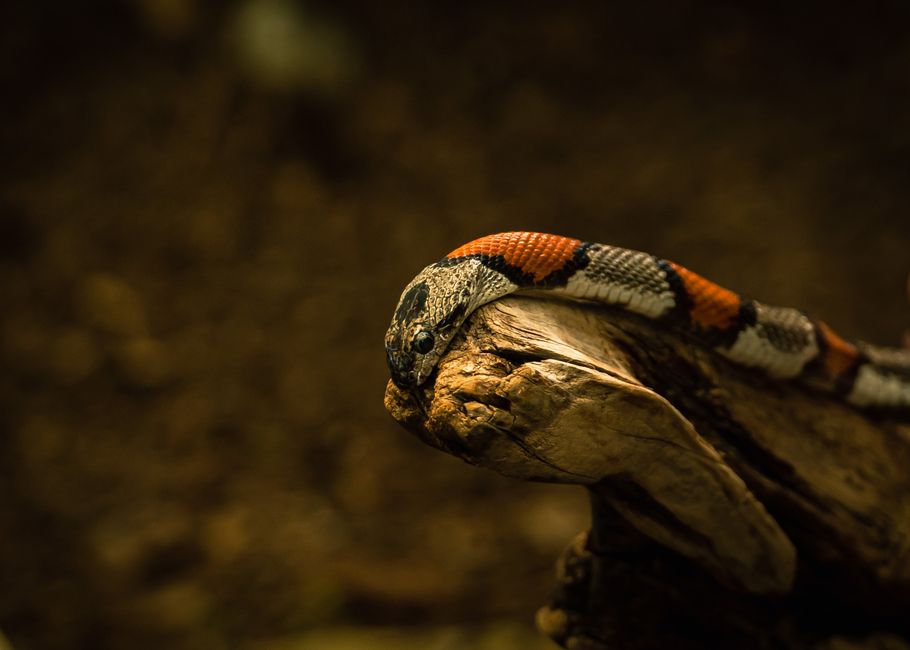 Non-venomous
Scarlet Kingsnake
Lampropeltis elapsoides
A harmless coral snake mimic. Its red bands touch black bands — 'red touches black, friend of Jack' — separating it from the venomous coral snake.