Russell's Viper
Daboia russelii · Viperidae
Also called: Daboia, Chain Viper
One of the deadliest snakes in Asia and a member of India's 'big four.' Its loud hiss and chain-like pattern are warning signs of a potent, organ-damaging venom.
What the Russell's Viper looks like
How to identify it
- 1Stout brown body with three rows of dark, white-edged oval rings
- 2Large flat triangular head with a V or arrow mark
- 3Loud, distinctive hiss when threatened
- 4Vertical pupils
Snakes it's confused with
Pythons share blotchy patterns but lack the viper's triangular head and chain rings.
Behavior & danger to humans
Coils, hisses loudly and strikes fast; a leading cause of snakebite in Asia.
⚠️ Danger: Potentially lethal. Causes severe bleeding and organ damage — a critical emergency.
Related snakes
 Venomous
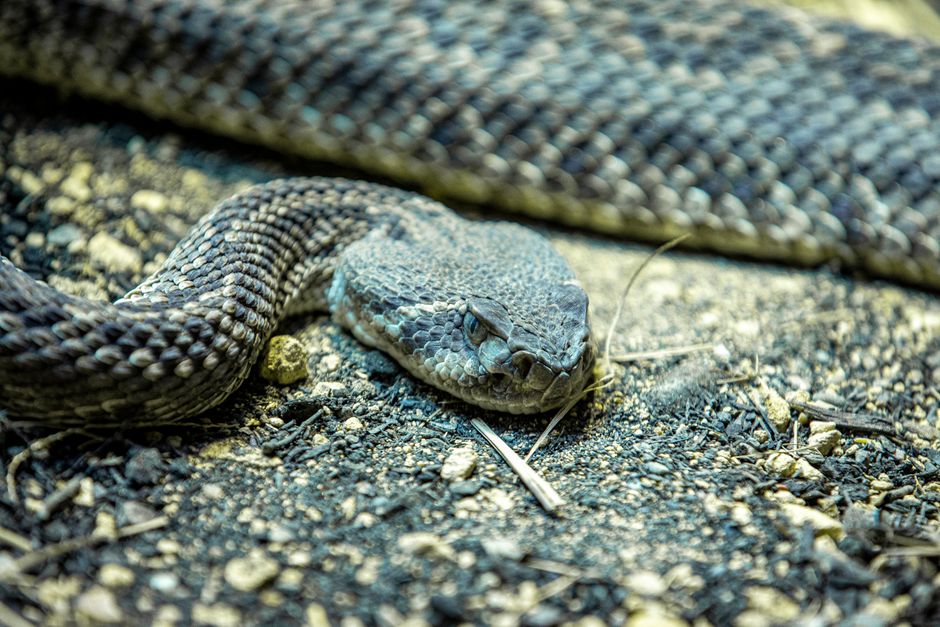
Eastern Diamondback Rattlesnake
Crotalus adamanteus
The largest venomous snake in North America and arguably the most dangerous. Its hemotoxic venom destroys tissue and blood cells, and a defensive bite is a medical emergency.
 Venomous
Copperhead
Agkistrodon contortrix
Responsible for more venomous snakebites than any other US species, but its bite is rarely fatal. Excellent camouflage in leaf litter leads to surprise encounters.
 Venomous
Cottonmouth (Water Moccasin)
Agkistrodon piscivorus
A semi-aquatic pit viper named for the white interior of its mouth, which it gapes as a warning. The only venomous water snake in North America.
 Venomous
Eastern Coral Snake
Micrurus fulvius
A relative of cobras with potent neurotoxic venom. Famous for the rhyme 'red touches yellow, kill a fellow' that separates it from harmless mimics.