Biggest Snake in the World: Giants of the Reptile Kingdom Revealed
What Is the Biggest Snake in the World?
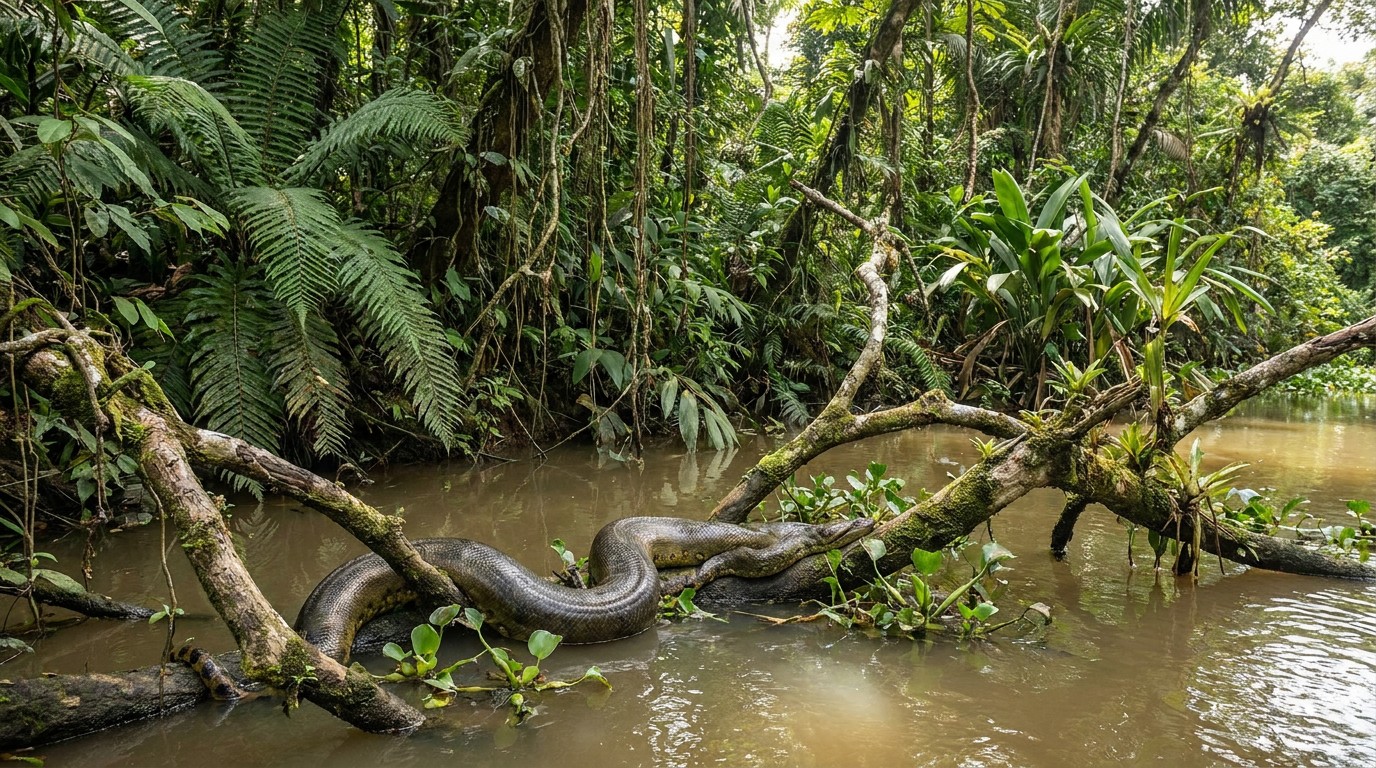
When people ask about the biggest snake in the world, the answer depends on how you define 'biggest.' Are we talking about the heaviest snake, the longest, or perhaps the largest by sheer body mass? The truth is, two species compete fiercely for the title: the Green Anaconda (Eunectes murinus) and the Reticulated Python (Malayopython reticulatus). The green anaconda holds the crown for the heaviest and most massive snake on Earth, with females regularly exceeding 200 pounds and occasionally surpassing 550 pounds in exceptional cases. The reticulated python, on the other hand, takes the prize for the longest snake in the world, with verified lengths reaching over 20 feet and unverified reports climbing even higher. Both of these incredible reptiles inspire awe, fear, and fascination in equal measure. Understanding these giants is not just a matter of satisfying curiosity — it's also critical for safety, conservation, and a deeper appreciation of the natural world. Whether you're a wildlife enthusiast, a traveler heading into tropical habitats, or simply someone who just stumbled across a massive serpent in their backyard, knowing your giants is the first step to staying safe and informed.
Green Anaconda: The Heaviest Snake on Earth
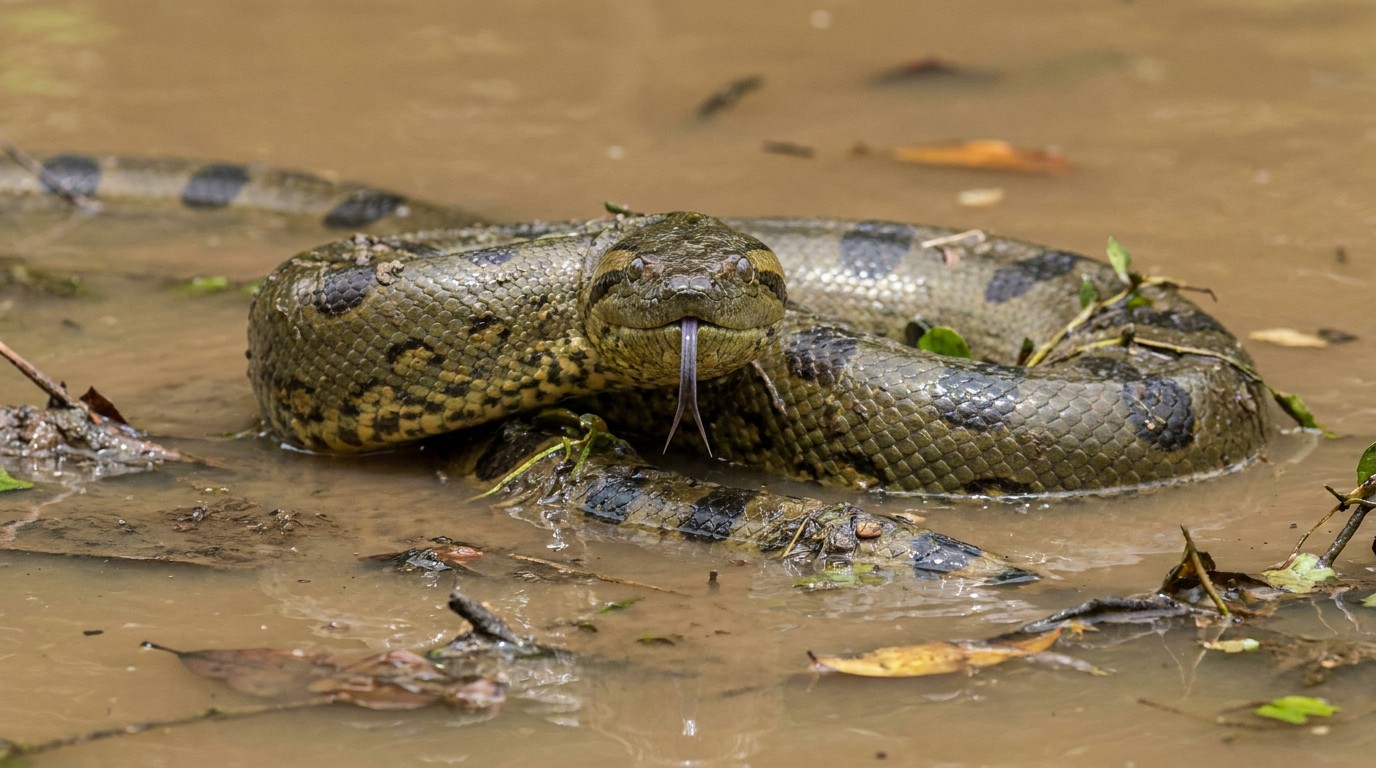
The Green Anaconda (Eunectes murinus) is without question the most massive snake on Earth by weight and girth, earning its reputation as the biggest snake in the world in terms of sheer body mass. Native to the tropical rainforests, swamps, and river systems of South America — particularly the Amazon and Orinoco basins — these semi-aquatic giants spend much of their time partially submerged in slow-moving water. Adult females are significantly larger than males, a phenomenon known as sexual dimorphism, and can weigh anywhere from 200 to over 550 pounds (90 to 250 kilograms). Their body diameter can exceed 12 inches, making them as wide as a telephone pole. In terms of length, green anacondas typically measure between 15 and 20 feet, though there are credible reports of individuals reaching 25 to 30 feet. Their olive-green coloring with black oval blotches provides exceptional camouflage in murky water and dense vegetation. As apex predators, green anacondas are constrictors — they don't use venom but instead overpower prey by coiling their powerful bodies around it, squeezing until the prey's heart stops. Their diet includes deer, capybaras, caimans, and even jaguars on rare occasions. Despite their fearsome reputation, anacondas are not aggressive toward humans by nature and prefer to avoid confrontation. They are an essential part of their ecosystem, helping to regulate prey populations and maintain ecological balance.
Reticulated Python: The Longest Snake Ever Recorded
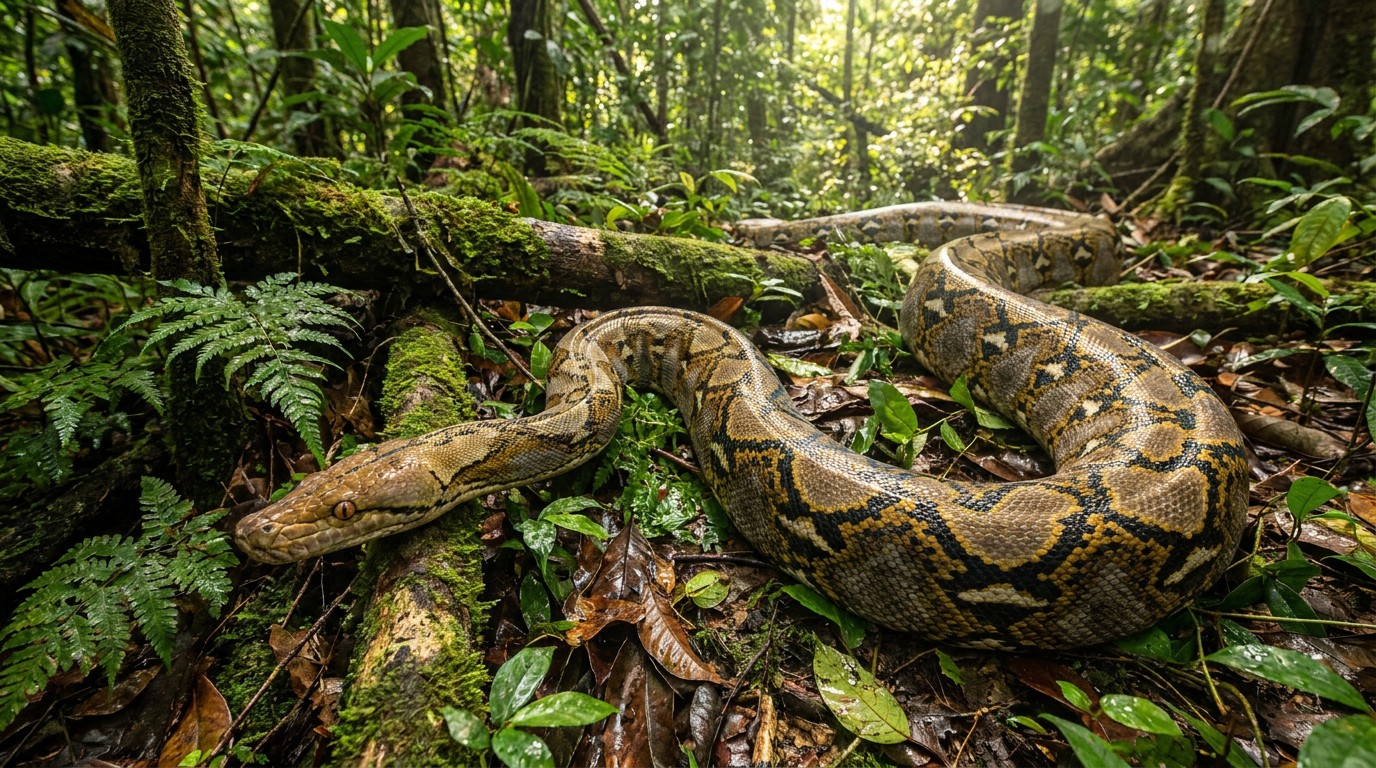
If the green anaconda wins on mass, the Reticulated Python (Malayopython reticulatus) takes the undisputed title for the longest snake in the world. Found across South and Southeast Asia — including Indonesia, the Philippines, Malaysia, and Thailand — reticulated pythons are the world's longest reptiles and rank among the heaviest as well. The name 'reticulated' refers to the intricate, net-like pattern of their scales, featuring a complex geometric design of gold, brown, tan, and black that is as beautiful as it is effective for camouflage. Verified record holders have measured over 20 feet (6.1 meters) with unconfirmed reports of individuals reaching 25 to 33 feet. The longest verified reticulated python ever recorded was Medusa, a captive specimen that measured 25 feet 2 inches (7.67 meters) and was recognized by the Guinness World Records. In the wild, these pythons inhabit tropical rainforests, woodlands, and nearby grasslands, often staying close to water sources. Like anacondas, they are non-venomous constrictors capable of consuming large prey including deer, pigs, and primates. Adult reticulated pythons can weigh between 100 and 350 pounds (45 to 158 kilograms), making them formidable predators. In parts of their native range, they occasionally come into conflict with humans, particularly in areas where natural habitat is shrinking due to deforestation and urban expansion. Conservation efforts are increasingly important for protecting these magnificent animals.
Other Contenders: More of the World's Largest Snakes
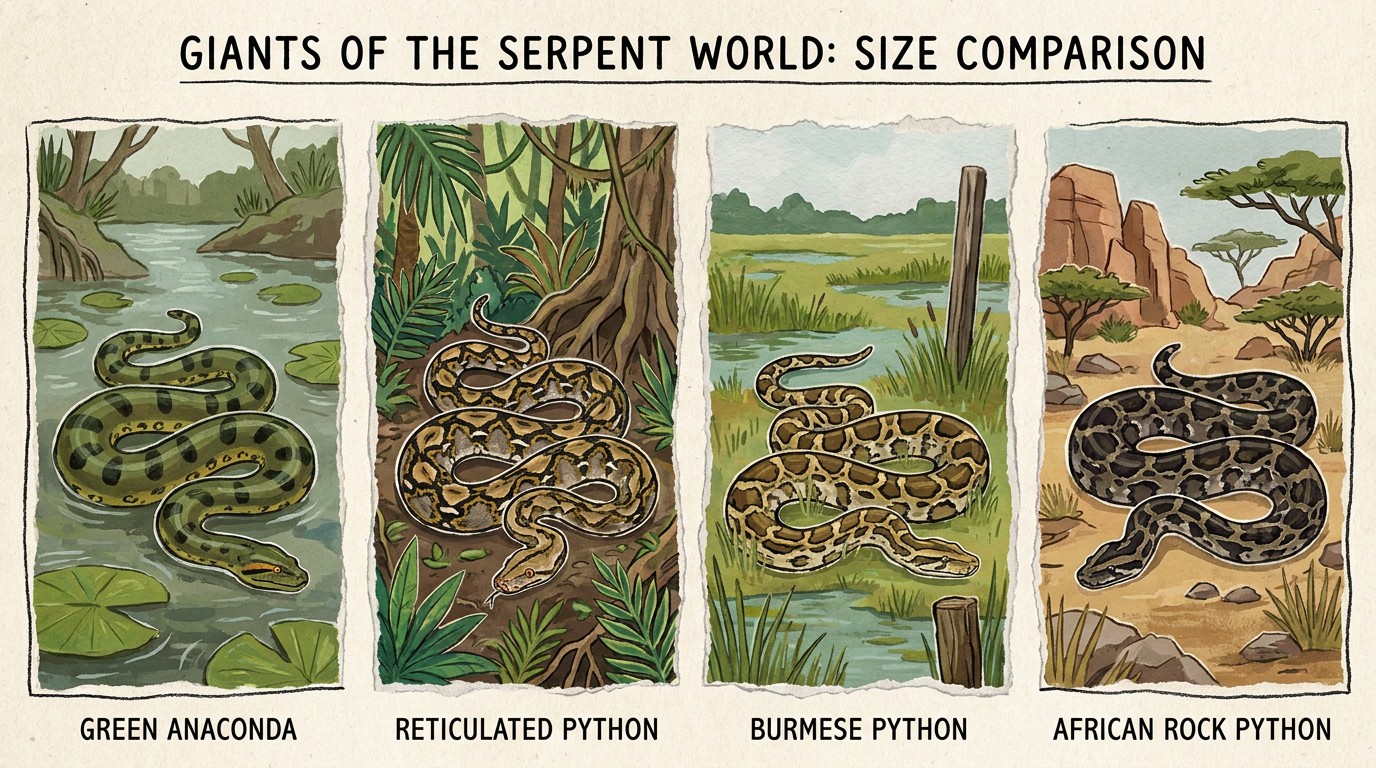
While the green anaconda and reticulated python dominate the conversation about the biggest snake in the world, several other species deserve recognition for their impressive size. The Burmese Python (Python bivittatus) is the third-largest snake on Earth, regularly reaching 18 feet in length and weighing up to 200 pounds. Originally from Southeast Asia, Burmese pythons have become a significant invasive species in the Florida Everglades, where they are wreaking havoc on native wildlife populations. The African Rock Python (Python sebae) is Africa's largest snake, capable of reaching 20 feet and weighing over 250 pounds. Found across sub-Saharan Africa, this powerful constrictor is known for its aggressive temperament and has been involved in documented human attacks. The Indian Python (Python molurus) is closely related to the Burmese python and shares a similar size range, typically measuring 10 to 16 feet. The Amethystine Python, also called the Scrub Python (Simalia amethistina), is Australia's largest snake, with individuals recorded at over 18 feet. The Yellow Anaconda (Eunectes notaeus), a smaller relative of the green anaconda, still reaches impressive lengths of up to 15 feet. Each of these species plays a critical ecological role in their native habitats and represents millions of years of evolutionary refinement. Understanding the diversity of large snakes is key to appreciating the complexity of our planet's ecosystems.
How to Identify a Large Snake Safely — Use IdentifyThis.app
Encountering a large snake — whether in the wild, in your garden, or in an urban setting — can be a startling experience. The most important rule is simple: do not attempt to handle or approach any snake you cannot positively identify. Misidentification can have serious, even fatal, consequences. This is where modern technology becomes your best ally. IdentifyThis.app offers a powerful, AI-driven snake identification tool specifically designed to help you identify any snake quickly and safely from a photograph. By visiting /identify-this-snake on IdentifyThis.app, you can upload a clear photo of the snake you've encountered and receive an accurate identification within seconds, along with detailed information about the species, its behavior, its venom status, and recommended safety actions. This tool is invaluable for hikers, campers, homeowners, wildlife enthusiasts, and anyone who spends time in snake-prone environments. When trying to photograph a snake for identification, always maintain a safe distance of at least six feet, use a zoom lens or the zoom feature on your phone, avoid sudden movements, and never attempt to pin or restrain the snake. The IdentifyThis.app snake identifier draws on a comprehensive database of snake species from around the world, making it equally useful whether you're in the Amazon basin, the Australian outback, Southeast Asia, or your local park. Knowing what you're dealing with is the foundation of safe and responsible coexistence with these incredible reptiles.
Fascinating Facts and Size Comparisons of Giant Snakes
To truly appreciate the scale of the biggest snakes in the world, consider some staggering size comparisons. A fully grown green anaconda at 20 feet is longer than a mid-size SUV and heavier than a fully grown male black bear. A reticulated python at 25 feet would stretch across nearly four standard American parking spaces end to end. These animals are not just large — they are engineering marvels of nature. Their skeletal structure is remarkably flexible, with some species having over 400 vertebrae (compared to just 33 in humans), allowing them to swallow prey much larger than their own head diameter. Snake jaws are not 'dislocated' as is commonly believed — instead, the lower jaw bones are connected by a flexible ligament that allows extraordinary expansion. A large anaconda or python can consume an entire adult deer or caiman and then go weeks or even months without eating again, thanks to their incredibly slow metabolism. Interestingly, the largest snakes in the world are also among the longest-lived, with some captive individuals surviving for 25 to 30 years. Despite their size, these snakes move surprisingly efficiently both in water and on land, using a combination of muscular undulation, sidewinding, and rectilinear locomotion. The skin of large snakes is also an economic target — illegal poaching for the exotic leather trade remains a serious conservation concern, particularly for reticulated and Burmese pythons across Southeast Asia.
Conservation Status and the Future of the World's Biggest Snakes
Despite their apex predator status, the biggest snakes in the world face serious threats that put their long-term survival at risk. Habitat destruction is the number one challenge — as tropical rainforests are cleared for agriculture, logging, and urban development across South America and Southeast Asia, the natural habitats that support giant snakes are shrinking at an alarming rate. The Green Anaconda is currently listed as Least Concern by the IUCN, but population data is difficult to collect given their secretive, aquatic lifestyle, and many herpetologists believe the true picture may be more concerning. Reticulated pythons and Burmese pythons face intense hunting pressure for their skins, which are used in the luxury fashion industry to produce bags, shoes, belts, and accessories. Millions of snakes are harvested from the wild each year for the leather trade, and while some farming operations exist, wild harvesting remains rampant. African rock pythons are also harvested for bush meat and traditional medicine in parts of Africa. Climate change poses an additional threat, altering temperature and rainfall patterns in ways that can disrupt breeding cycles, prey availability, and habitat suitability. Conservation efforts include protected area management, anti-poaching enforcement, community education programs, and international trade regulations under CITES (Convention on International Trade in Endangered Species). Supporting responsible ecotourism, choosing synthetic alternatives to snake leather, and using identification tools like IdentifyThis.app to promote understanding rather than fear are all meaningful ways individuals can contribute to the conservation of these extraordinary animals.
Try It Now on IdentifyThis.app
Use our free AI-powered tool to biggest snake in the world instantly.
Try Free NowFrequently Asked Questions
What is the biggest snake in the world by length?
The Reticulated Python (Malayopython reticulatus) holds the record as the longest snake in the world. The longest verified specimen ever recorded was a captive reticulated python named Medusa, which measured 25 feet 2 inches (7.67 meters) according to Guinness World Records. In the wild, reticulated pythons commonly exceed 15 to 20 feet, with exceptional individuals potentially reaching beyond 22 to 23 feet. They are native to South and Southeast Asia and are non-venomous constrictors.
What is the heaviest and most massive snake ever recorded?
The Green Anaconda (Eunectes murinus) is the heaviest snake in the world by body mass and girth. The heaviest reliably recorded individual weighed approximately 550 pounds (250 kilograms) and measured around 17 to 20 feet in length. Female anacondas are significantly larger than males. Their enormous body diameter — sometimes exceeding 12 inches — combined with their weight makes them the most massive snakes on Earth, even though the reticulated python can exceed them in total length.
Are the biggest snakes in the world dangerous to humans?
While the world's largest snakes — including green anacondas, reticulated pythons, and African rock pythons — are powerful enough to pose a danger to humans, unprovoked attacks are extremely rare. Most large constrictor snakes prefer to avoid humans altogether. However, there are documented cases of reticulated pythons and African rock pythons attacking and in rare cases killing humans, typically when the snake felt threatened or was extremely large and hungry. The safest approach is always to maintain a respectful distance, never attempt to handle a wild snake you cannot positively identify, and use a snake identification tool like IdentifyThis.app for safe remote identification.
How can I identify a large snake I've encountered in the wild?
The safest and most reliable way to identify a large snake you encounter in the wild is to take a clear photograph from a safe distance of at least six feet and use a snake identification app. IdentifyThis.app offers a dedicated snake identification tool at /identify-this-snake that uses AI technology to identify snake species from photos within seconds, providing information about the species, its venom status, habitat, behavior, and recommended safety steps. Never attempt to handle, capture, or closely approach an unidentified snake, especially a large one. Key visual features to note from a distance include color, pattern, head shape, and body thickness.
What did the biggest snake in prehistoric history look like?
The largest snake to ever exist on Earth was Titanoboa cerrejonensis, a prehistoric constrictor that lived approximately 58 to 60 million years ago in what is now Colombia, South America. Based on fossilized vertebrae discovered in the Cerrejón coal mine, scientists estimate that Titanoboa measured between 40 and 50 feet (12 to 15 meters) in length and weighed an estimated 2,500 pounds (1,135 kilograms). It is believed to have resembled a modern anaconda in lifestyle — semi-aquatic and a powerful constrictor — but dwarfs even the largest living snakes in the world by a dramatic margin. Its existence was made possible by the warm, humid climate of the Paleocene epoch.