Identify This Bug - Free AI Bug Identifier
Take a picture and tell me what bug this is. Free AI-powered insect identifier. Identify spiders, beetles, ants, and pests instantly.
Upload Your Image
Drag and drop your image here, or click to browse
Supports JPG, PNG, HEIC formats up to 10MB. Your images are processed securely and not stored.
Written by the IdentifyThis Research Team · Reviewed by Adam, founder of IdentifyThis.app · Updated June 2026
Common Bugs You'll Find in and Around Your Home
Before you upload a photo, it helps to know the usual suspects. These twelve account for the overwhelming majority of "what bug is this?" questions we see — with the field marks that identify each and an honest read on whether it's a problem.
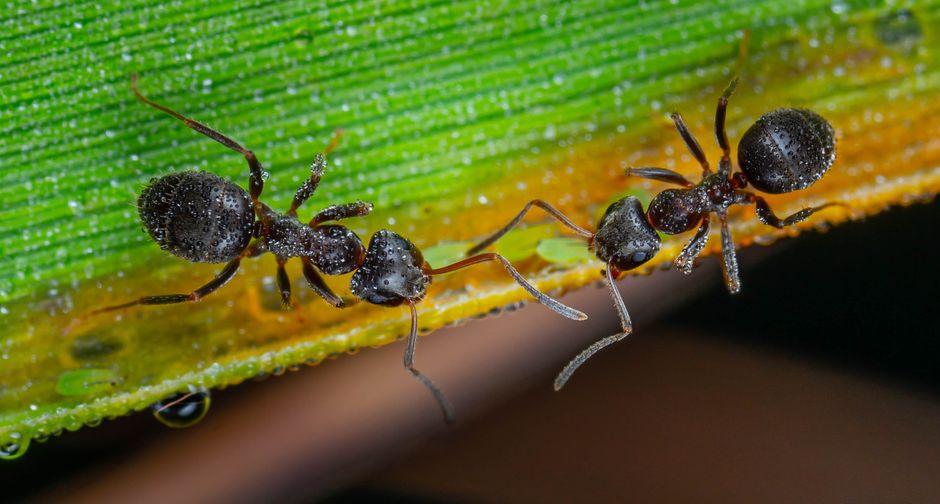
The most common household intruder in the world. Look for the pinched waist, elbowed antennae, and trails of workers following scent paths to food. Carpenter ants (large, black, often winged in spring) matter most — they excavate damp wood and can signal a moisture problem in your walls. Fire ants, common in the southern US, deliver a burning sting that forms small pustules.
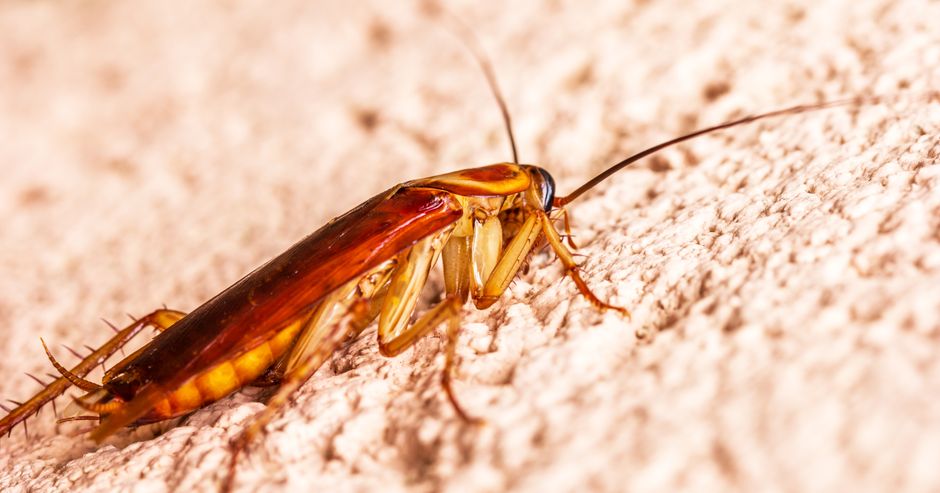
Flat, oval, fast, and most active at night. German cockroaches (small, two dark stripes behind the head) infest kitchens; American cockroaches (large, reddish) prefer basements and drains. Seeing one during daylight often means an established population. They don't bite, but they spread bacteria and their droppings are a major asthma and allergy trigger.
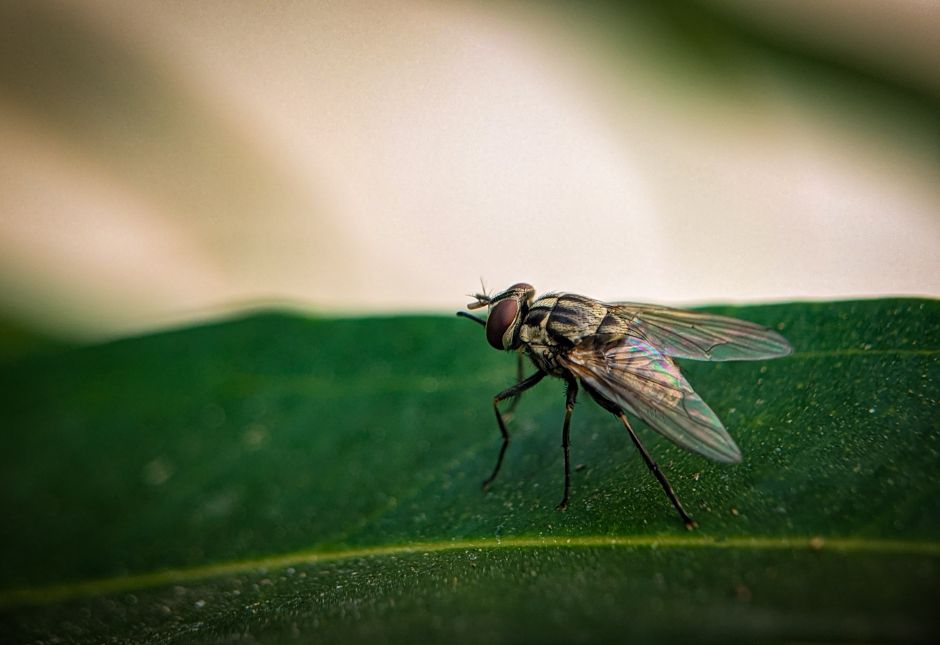
Gray, four dark stripes on the thorax, sponging mouthparts. Flies can't bite, but they mechanically transfer pathogens from waste to food. A sudden indoor swarm of large, sluggish flies (cluster flies) usually points to a wall void or attic they've used to overwinter — not a sanitation issue.
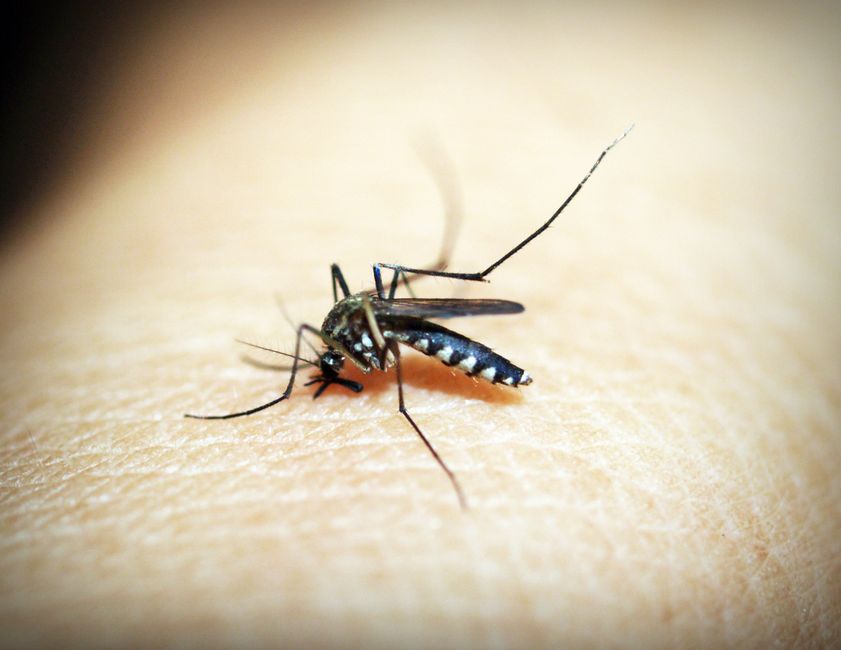
Slender body, long legs, one pair of wings, and that unmistakable whine. Only females bite. The bites form itchy welts within minutes. Mosquitoes are the world's most medically significant insect — in the US, West Nile virus is the main concern. Standing water as small as a bottle cap is enough to breed them.
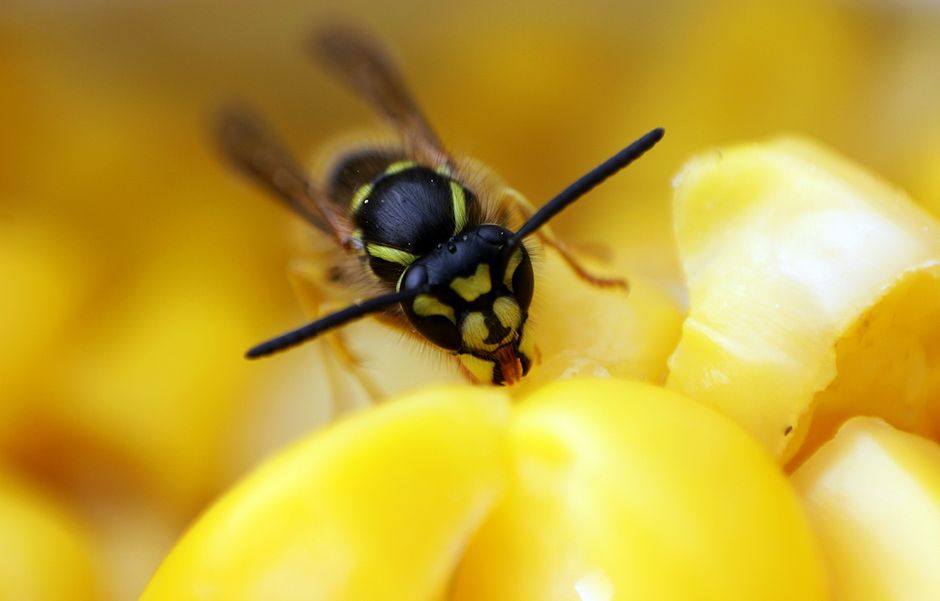
Smooth, shiny bodies with a dramatic narrow waist — unlike fuzzy bees. Paper wasps build open honeycomb nests under eaves; yellowjackets nest in the ground and become aggressive in late summer. Unlike honey bees, wasps sting repeatedly. A baseball-sized gray paper nest with an entrance hole belongs to bald-faced hornets — keep your distance.
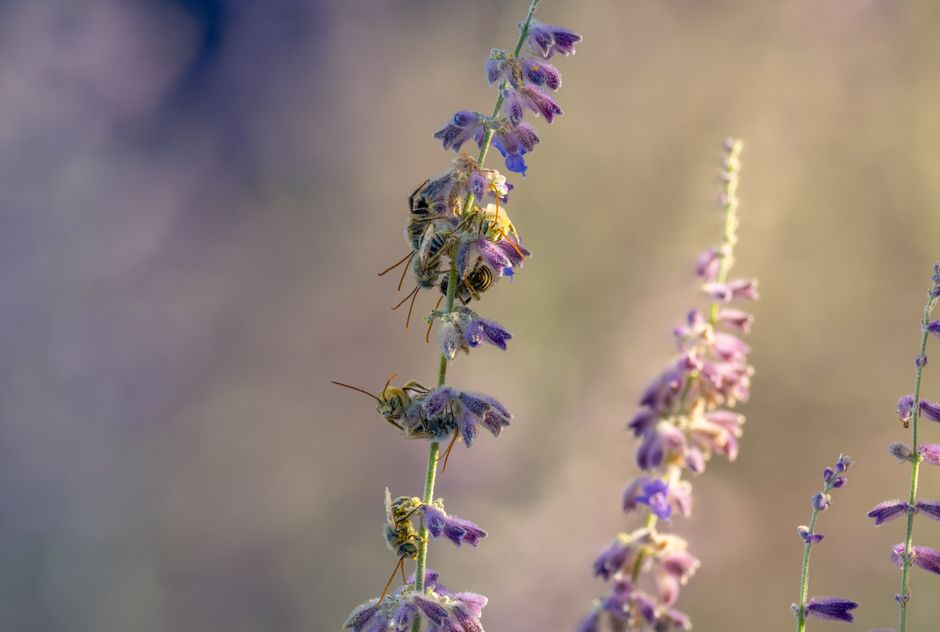
Fuzzy, robust pollinators. Honey bees die after one sting and only sting defensively. Bumble bees are larger, louder, and even more docile. Carpenter bees look like bumble bees but with a shiny, hairless abdomen — males hover aggressively but can't sting at all. If a honey bee swarm settles on your property, call a local beekeeper, not an exterminator.
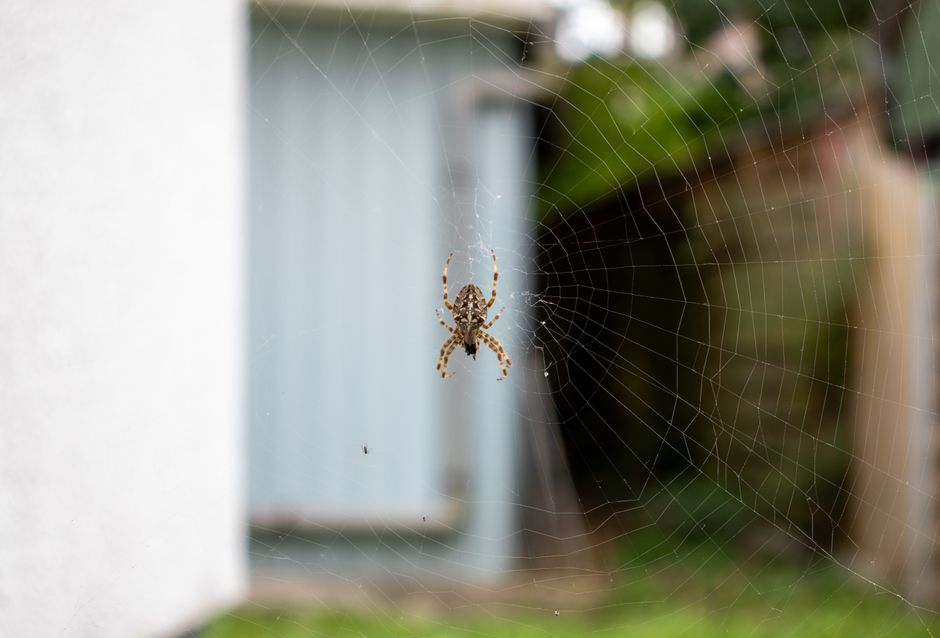
Eight legs, two body segments — technically arachnids, not insects. Of the thousands of US species, only two are medically significant: the black widow (glossy black, red hourglass) and the brown recluse (violin marking, six eyes, limited to the central/southern US). Everything else, including the alarming-looking wolf spider, is functionally harmless pest control.
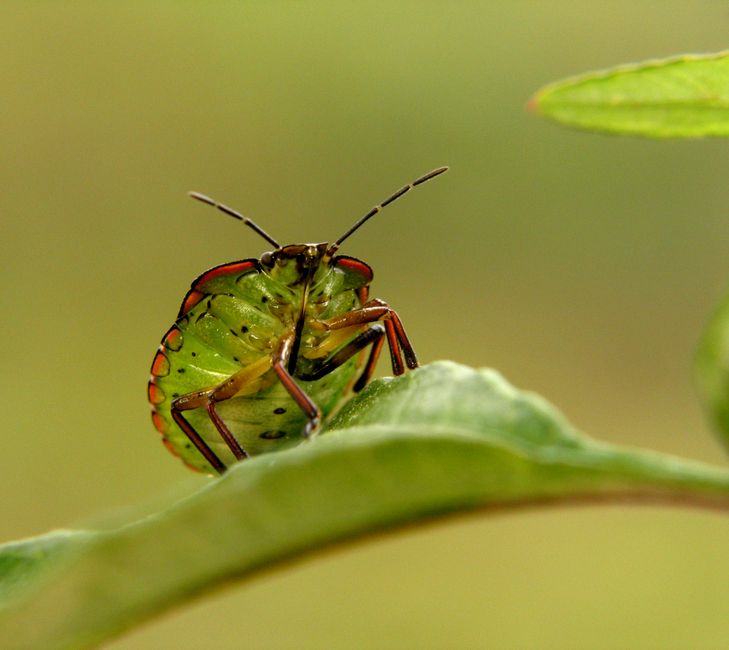
Shield-shaped, mottled brown, and slow. The brown marmorated stink bug is an invasive species that pours into homes each fall seeking warmth. They don't bite, sting, breed indoors, or damage the house — they're just persistent and smelly when crushed. Vacuum them rather than squashing.
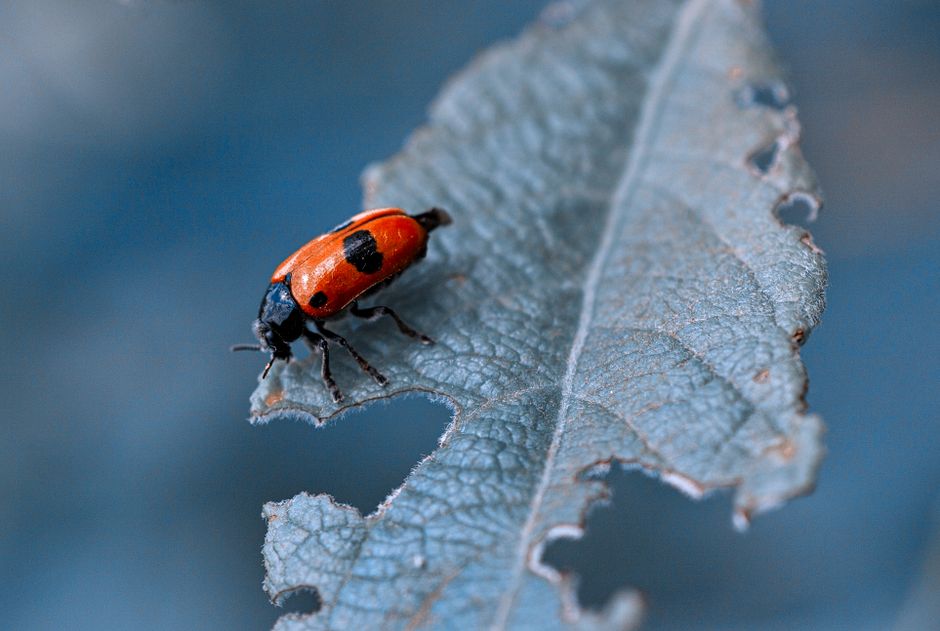
Welcome guests — a single ladybug eats up to 5,000 aphids in its lifetime. The lookalike Asian lady beetle (orange rather than red, with an 'M' marking behind the head) swarms homes in autumn and can nip skin and stain surfaces, but is still essentially harmless.
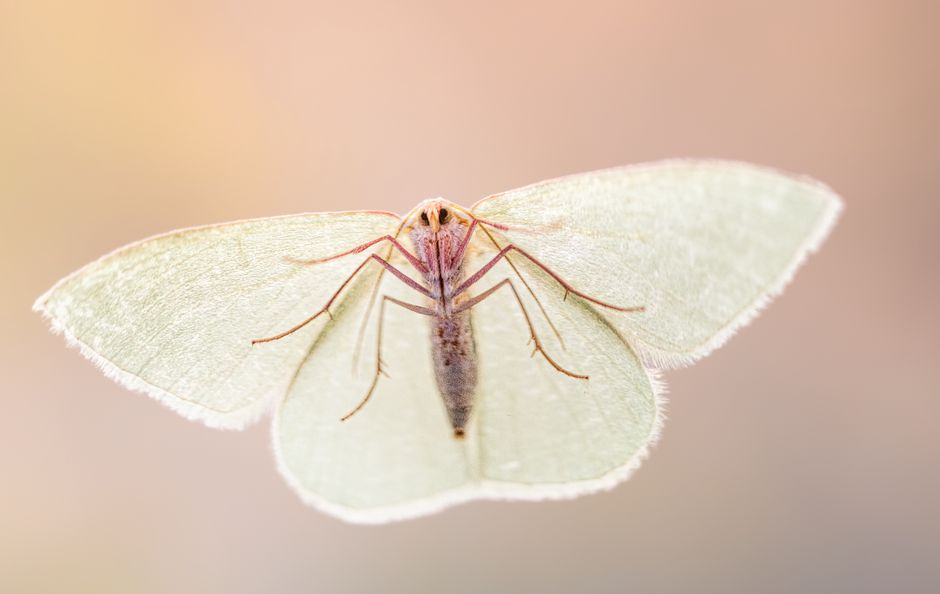
Feathery antennae and wings held flat at rest distinguish moths from butterflies. The two indoor troublemakers: clothes moths (tiny, golden, avoid light — their larvae eat wool and silk) and pantry moths (zigzag flight near the kitchen — check your grains and pet food for webbing).
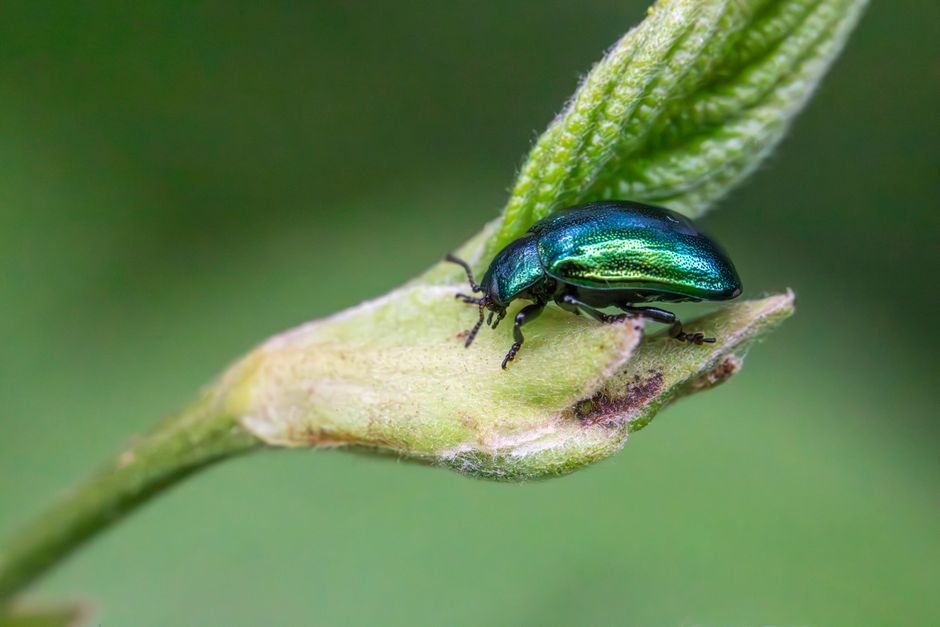
The largest group of insects on Earth, identified by hardened wing covers that meet in a straight line down the back. Indoors, watch for carpet beetles (small, mottled, larvae eat natural fibers) and powderpost beetles (tiny exit holes in hardwood with fine dust below — a structural concern).
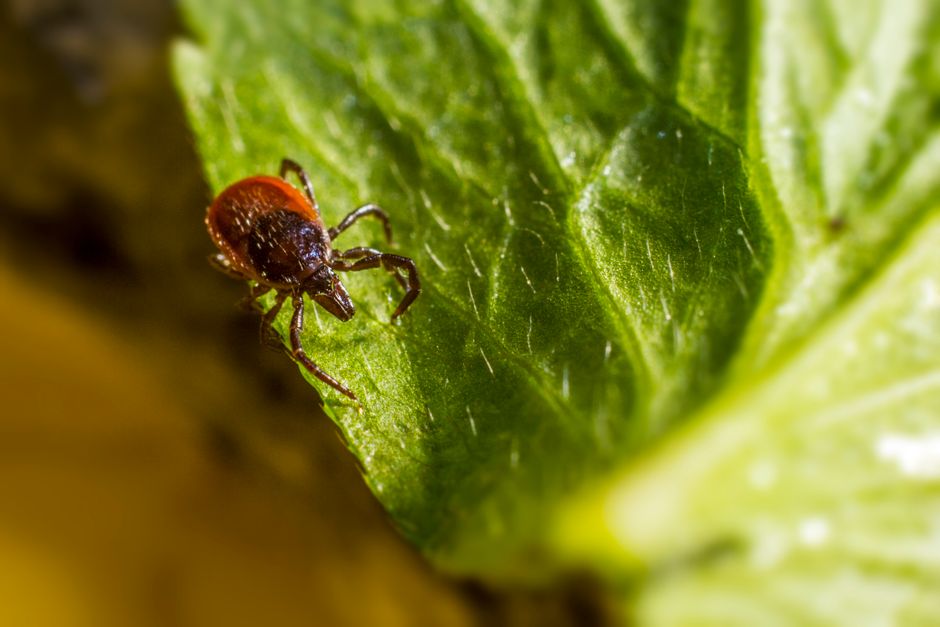
Not insects but parasitic arachnids that attach and feed for days. The blacklegged (deer) tick transmits Lyme disease; the lone star tick (single white dot) can trigger a red-meat allergy. Found one attached? Remove it promptly with fine-tipped tweezers and photograph it for identification — species matters for disease risk.
Dangerous vs Harmless: How to Tell Fast
Here's the reassuring truth most pest websites won't lead with: of the roughly 90,000 insect species in North America, only a tiny handful pose any real risk to people. The genuinely dangerous shortlist is short — black widow and brown recluse spiders, ticks carrying disease, mosquitoes in outbreak regions, stinging insects for people with venom allergies, and kissing bugs in the southern states. Nearly everything else, no matter how alarming it looks, is harmless.
Appearance is a famously bad danger signal. House centipedes look terrifying and hunt the pests you actually don't want. Wolf spiders are large, hairy, fast — and beneficial. Meanwhile the genuinely risky brown recluse is small, plain, and easy to overlook. Bright warning colors usually advertise bad taste to birds, not danger to you. This mismatch between scary-looking and actually-dangerous is exactly why photo identification beats gut instinct.
- Glossy black spider with a red hourglass (black widow)
- Plain brown spider with a violin mark, in the central/southern US (brown recluse)
- Any attached tick — remove promptly and identify the species
- Ground-nesting yellowjackets in late summer (mass sting risk)
- Cone-nosed "kissing bugs" in southern states (Chagas disease vector)
- House centipedes — they eat roaches, silverfish, and moth larvae
- Wolf spiders and jumping spiders — free pest control
- Earwigs — the pincers are for show; they don't crawl into ears
- Crane flies — not giant mosquitoes; adults often don't eat at all
- Cicada killers — huge wasps, almost never sting people
Signs of an Infestation You Shouldn't Ignore
One bug is a visitor; a pattern is a problem. The difference between a $0 fix and a $2,000 pest-control contract is usually how early you read the signs. Identify the species first — treatment for the wrong bug wastes money and time while the real population grows.
Droppings and frass
Pepper-like specks along baseboards point to roaches; fine sawdust piles below wood (frass) mean carpenter ants or powderpost beetles are excavating.
Shed skins and egg cases
Insects molt as they grow. Translucent shed skins behind furniture or purse-shaped roach egg cases in cabinet corners mean breeding is happening indoors, not just visiting.
Damage patterns
Irregular holes in wool clothing (clothes moths), webbing in flour or pet food (pantry moths), hollow-sounding wood or mud tubes on the foundation (termites — get a professional inspection).
Daytime sightings of nocturnal pests
Roaches and rodents avoid light. Seeing them at midday usually means the population has outgrown its hiding spots — the single most reliable severity signal.
Bites that appear overnight
Waking with bites in lines or clusters, especially along skin that touched the mattress, is the classic bed bug pattern. Check mattress seams for rust-colored spots before treating anything.
Sounds and smells
A sweet, musty odor can indicate a heavy roach population; rustling in walls at dusk suggests wasps, carpenter ants, or something bigger that needs identifying before sealing it in.
How to Identify This Bug - Complete Guide
Follow these simple steps to get accurate bug identification results with safety information
Upload a clear, close-up photo of the bug. Include body parts, wings, antennae, and size reference for best results.
Our AI analyzes body parts, wings, antennae, size, and coloration using advanced insect recognition technology.
Get instant bug identification with confidence scores, scientific names, and danger level classification.
Learn about bug behavior, habitat, control methods, and safety warnings for dangerous species.
Pro Tips for Better Bug Identification
📸 Photo Quality
- • Use macro mode or get as close as possible
- • Include the entire bug in the frame
- • Take photos in good lighting
- • Show distinctive features like wings or antennae
🐛 Best Features to Capture
- • Body shape and segmentation
- • Wing structure and patterns
- • Antennae length and shape
- • Size comparison with common objects
What Bugs Can This Identify?
Our AI can identify thousands of insect species across all major categories. Choose your bug type for specialized identification with safety warnings.
Monarch, tomato hornworm, cabbage worm identification
Black widow, brown recluse, garden spider recognition
Japanese beetle, ladybug, carpet beetle identification
House cricket, camel cricket, field cricket recognition
Fire ant, carpenter ant, sugar ant identification
Mosquito, gnat, fruit fly identification
Termite, cockroach, bed bug recognition
Best Free Alternative to Picture This Bug Identifier
Looking for picture this bug identifier free? Our identify this bug app offers everything Picture This insect app does, but completely free. No subscription required like picture this bug identifier cost.
| Feature | IdentifyThis.app | Picture This |
|---|---|---|
| Bug Identification | ||
| Spider Identification | ||
| Insect Classification | ||
| Pest Control Methods | ||
| Safety Warnings | ||
| Bite Treatment Info | ||
| Completely Free | ||
| No Subscription | ||
| Privacy Focused |
Why Users Switch from Picture This to IdentifyThis.app
Forever free vs Picture This $39.99/year
Accuracy rate with safety warnings
Privacy concerns or hidden fees
Better Than Google Identify This Bug
While "hey google identify this bug" or "google identify this bug" can help, our dedicated bug identifier provides more comprehensive results than Google Lens with safety warnings and control methods.
- Basic bug identification (Google Lens, iNaturalist)
- PictureThis does not identify bugs at all
- No safety warnings or control methods
- Privacy concerns — photos stored or shared publicly
- Advanced bug identification + all other categories
- Just $6.99/year — all categories included
- Safety warnings, bite treatment & control guides
- Complete privacy — images never stored
| Feature | Google Lens | PictureThis | Seek / iNaturalist | IdentifyThis.app |
|---|---|---|---|---|
| Bug Identification | ||||
| All-in-One (bugs, plants, rocks, objects) | ||||
| Detailed Control Methods | ||||
| Safety Warnings & Bite Treatment | ||||
| Privacy (images not stored) | ||||
| No App Download Required | ||||
| Affordable ($6.99/yr or $10/mo) | ||||
| Dangerous Species Alerts | ||||
| Offline Mode | ||||
| Speed (near-instant) |
Not Just Identification - Complete Bug Control
Once you identify this bug, learn how to control it with our comprehensive pest management guides
Eco-friendly pest control methods using essential oils, beneficial insects, and organic treatments
Safe and effective chemical control options with proper application instructions and safety precautions
Habitat modification, exclusion techniques, and environmental changes to prevent future infestations
Know when to call professional exterminators for severe infestations or dangerous species
Complete Bug Control After Identification
Don't just identify your bug - learn how to control it effectively! Our control guides include everything from natural remedies to professional treatment options.
Detailed control guides
Pest control support
Success rate with our methods
Dangerous Bug Identification & Safety
Identify dangerous bugs and learn critical safety information to protect yourself and your family
Muscle cramps, nausea, difficulty breathing
Seek immediate medical attention
Tissue death, fever, joint pain
Emergency medical care required
Severe allergic reactions, anaphylaxis
Use EpiPen if available, call 911
Lyme disease, Rocky Mountain spotted fever
Remove properly, monitor for symptoms
Identify black widows, brown recluses, and other dangerous spiders with immediate safety protocols
Recognize wasps, hornets, and aggressive bees with allergy information and emergency response
Identify ticks, mosquitoes, and other disease-carrying bugs with prevention and treatment advice
First aid instructions, when to call 911, and allergic reaction management protocols
Emergency Bug Bite Protocol
Identify the Bug
Take a photo if safe to do so for medical professionals
Apply First Aid
Clean wound, apply ice, monitor for allergic reactions
Seek Medical Help
Call 911 for severe reactions or venomous bites
Seasonal Bug Identification
Different bugs are active throughout the year. Learn what to expect and how to prepare for each season.
Identify emerging pests and beneficial insects
As temperatures warm up, many insects emerge from winter dormancy
Common Spring Bugs:
Solution: Seal entry points
Solution: Beneficial insects
Solution: Professional treatment
Solution: Encourage presence
Common biting bugs and garden pests
Peak activity season for most insects, including biting and stinging species
Common Summer Bugs:
Solution: Remove standing water
Solution: Professional removal
Solution: Traps and treatments
Solution: Protective clothing
House-invading bugs seeking shelter
Many insects seek warm indoor spaces as temperatures drop
Common Fall Bugs:
Solution: Seal cracks
Solution: Vacuum removal
Solution: Light management
Solution: Professional treatment
Indoor pest identification
Focus shifts to indoor pests that remain active in heated spaces
Common Winter Bugs:
Solution: Regular cleaning
Solution: Humidity control
Solution: Sanitation & baits
Solution: Storage containers
Year-Round Bug Identification & Control
Stay ahead of seasonal pest problems with our comprehensive identification and control guides tailored to each time of year.
Spring Guide
Summer Guide
Fall Guide
Winter Guide
All Our Bug & Insect Guides
Specialized identifiers for every kind of creepy-crawly question.
What is this bug in my house? Name it in seconds
Clothes moth or pantry moth? Find out fast
Fruit fly, fungus gnat, or drain fly?
Tiny red bugs and mites — biting or harmless?
Is it a bed bug — or a harmless look-alike?
From ladybugs to garden pests — which beetle?
Shield-shaped bugs invading in fall — stink bug or look-alike?
Black and red bugs on your house? Confirm in seconds
Ladybugs swarming your windows? Spot the M marking
Beetles, gnats, fleas, or springtails? Find out
Fuzzy little worms and shed skins in closets
Tiny red bugs on windowsills — do they bite?
Harmless recycler or fast biter? Count the legs
Swarmers in the house? Know if it's termites
Bitten? Identify what bit you from the bite pattern
Identify any spider species from a photo
Is that bite from a spider — and which one?
What spider is in my house — harmless or not?
False widow or harmless look-alike? Check in seconds
Count the eyes — recluse or harmless hunter?
Long-legged ceiling spider — harmless or not?
Bed bug, flea, or mosquito bites? Compare them
Carpenter, fire, pavement — know your ant
Identify caterpillars and what they become
Tell crickets, katydids, and grasshoppers apart
Species matters for disease risk — check yours
Tell stinging insects apart at a glance
From Mystery Bug to Action Plan
Three real identification scenarios our bug identifier handles every day
Brown Recluse Spider
High stakes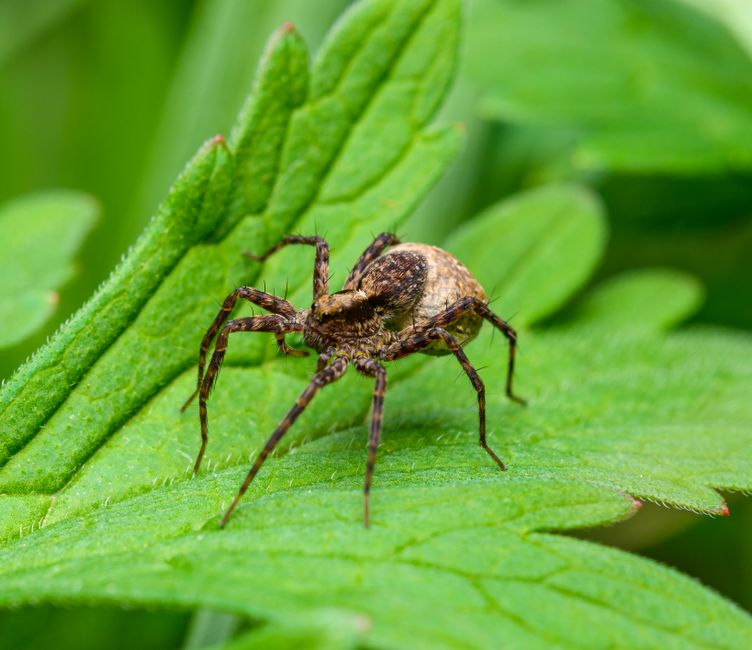
The Situation
A plain brown spider in the basement corner — small, easy to dismiss, but in the central US it could be one of the only two medically significant spiders in the country.
What the Identifier Tells You
Species match with confidence score, the violin-mark and six-eye field checks to confirm, and a clear danger assessment.
The Action Plan
Don't handle it. If confirmed recluse territory, professional pest control is warranted — and any bite that develops a blister or darkening needs a doctor.
What People Use Our Free Bug Identifier For
“Tell me what bug this is”
The everyday mystery: something crawled across the kitchen floor and you want a name. Snap a photo, get the species plus whether it matters — most of the time the answer is reassuring.
“What bug is this in my house?”
Indoor sightings carry different stakes — is it a lone wanderer or the first sign of an infestation? The identification comes with the indoor-specific context: breeding risk, what attracts them, and prevention.
A Google Lens alternative for bugs
Google identifies the photo with a generic label. A dedicated bug identifier adds what Lens won't: danger assessment, bite information, control methods, and look-alike warnings for the species that matter.
A Picture This for insects
Picture This handles plants only. This identifier covers the bug side — insects, spiders, bites, and household pests — with safety information first, in your browser, no app download.
Got a Bug You Can't Name?
Upload a photo and get the species, the danger assessment, and the action plan in seconds — free to try.
Frequently Asked Questions
Get answers to common questions about our free bug identification app with safety features