How to Identify Caterpillars: The Complete Guide to Every Color, Shape, and Species
Why Learning How to Identify Caterpillars Matters
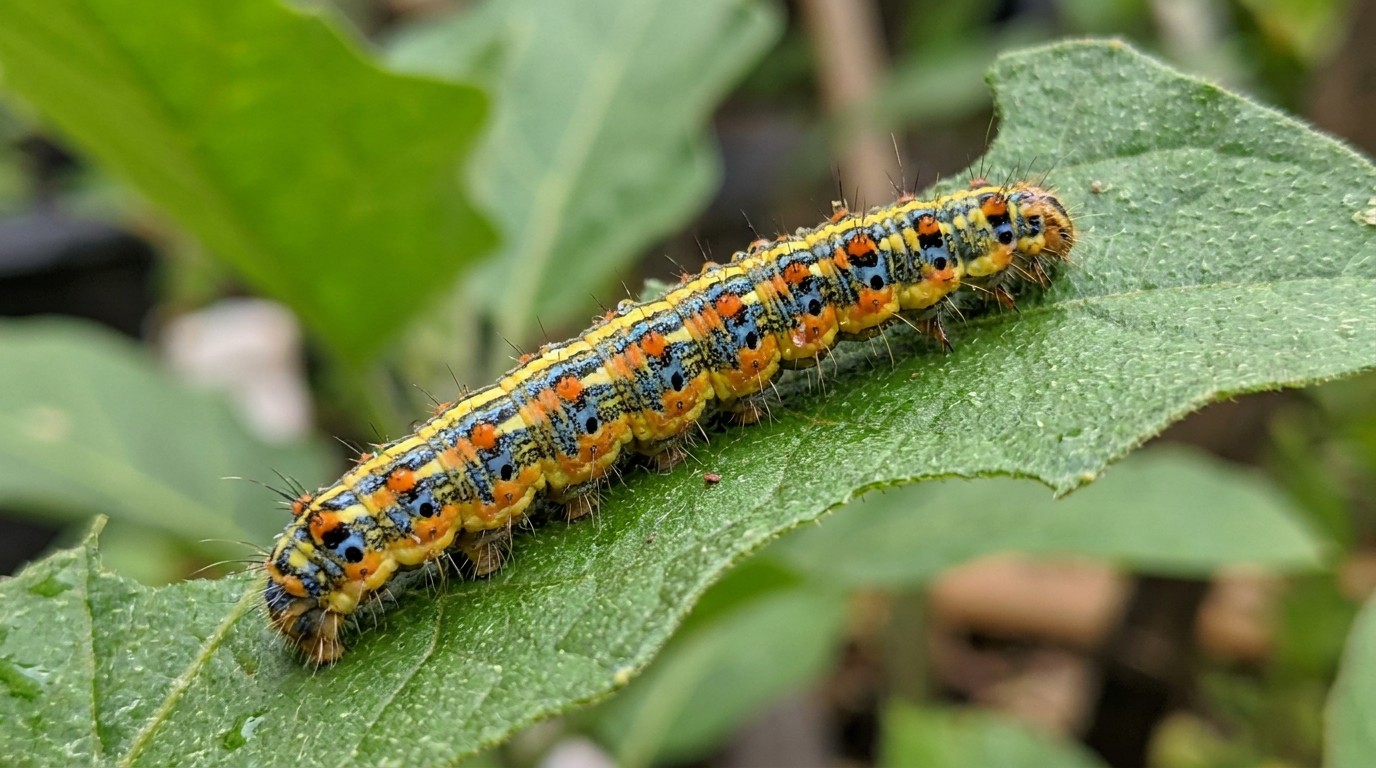
If you have ever turned over a leaf in your garden or spotted a fuzzy creature inching along a branch, you have probably wondered what species you were looking at. Knowing how to identify caterpillars is more than just a fun nature trivia exercise — it is genuinely important for gardeners, parents, hikers, and wildlife enthusiasts alike. Some caterpillars are harmless or even beneficial, acting as vital food sources for birds and other wildlife, while others can strip a vegetable garden bare in a matter of days. A small number of species — like the saddleback caterpillar or the hickory tussock moth larva — carry venomous spines that can cause skin irritation or allergic reactions on contact. Being able to quickly and accurately identify the caterpillar in front of you helps you make the right decision: leave it alone, relocate it, or take protective action. Beyond safety and pest control, caterpillar identification connects you to the broader world of entomology and ecology. Each caterpillar is a butterfly or moth in waiting, and understanding the larval stage deepens your appreciation for the remarkable transformation known as metamorphosis. Whether you are a curious amateur or a seasoned naturalist, this guide will give you all the tools you need to confidently identify caterpillars in the wild.
Key Physical Features to Look at When Identifying Caterpillars
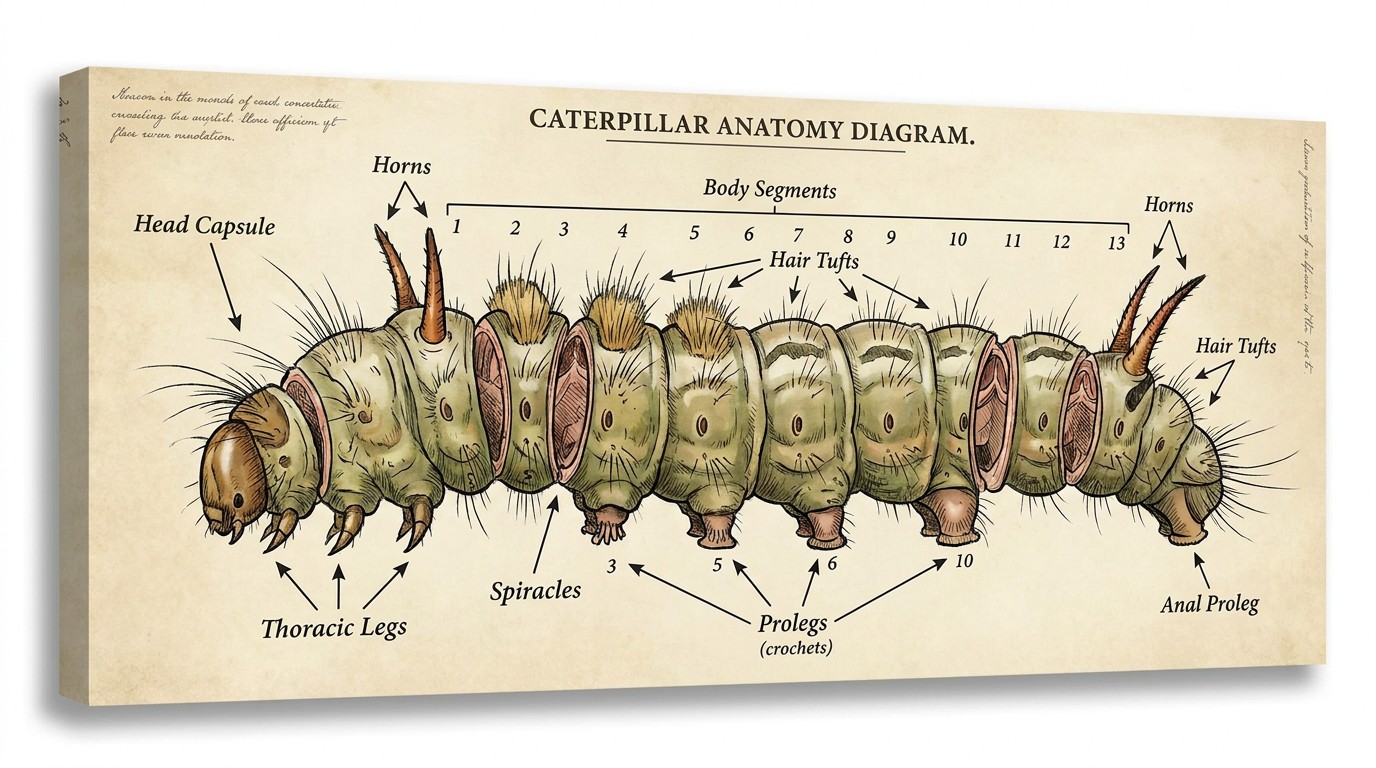
The first step in learning how to identify caterpillars is understanding which physical characteristics matter most. Caterpillars vary enormously in size, color, texture, and body structure, and each of these traits can narrow down the species considerably. Start by noting the overall body color and any patterns, stripes, or spots. A bright yellow and black striped caterpillar is likely a species like the cinnabar moth larva, while a solid velvety black caterpillar with orange-brown bands is the iconic woolly bear, associated with the Isabella tiger moth. Next, look at the body surface. Is it smooth and hairless, lightly fuzzy, or covered in dense tufts of bristly hairs? Hairy or spiny caterpillars are often mimicking toxic species or are genuinely venomous, so this trait is particularly important for safety reasons. Pay close attention to any horns, tubercles, or fleshy protuberances along the body — the osmeterium, a forked orange horn that swallowtail caterpillars deploy as a defense mechanism, is one of the most distinctive features in the insect world. Count the number of prolegs, the fleshy false legs located on the abdomen. Most caterpillars have five pairs of prolegs, but inchworms (geometrid moth larvae) have only two pairs, giving them their characteristic looping gait. Finally, note the head capsule color, whether it is black, brown, orange, or striped, as this detail frequently helps distinguish between closely related species. Taking a clear photograph of the caterpillar from multiple angles — top, side, and close-up of the head — dramatically improves identification accuracy.
How to Identify Caterpillars by Color and Pattern
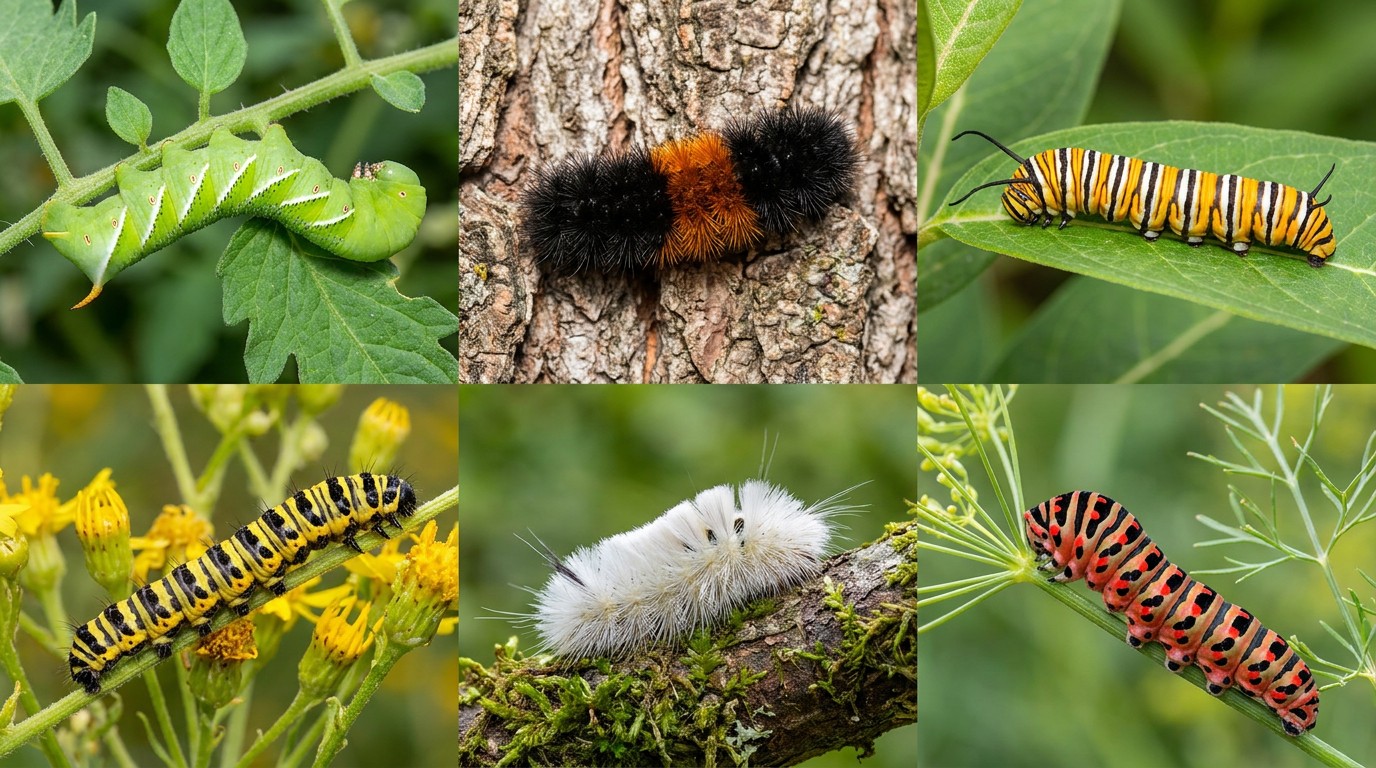
Color is often the first thing you notice about a caterpillar, and it can be a powerful identification clue — though you must be careful not to rely on it alone, since many species share similar color schemes and some caterpillars even change color as they mature through their larval instars. That said, color combined with pattern provides an excellent starting point. Green caterpillars are among the most common you will encounter, as green coloration provides superb camouflage against leaves. The luna moth caterpillar, for example, is a plump, bright green species with small yellow lateral stripes, while the tomato hornworm is a large green caterpillar with distinctive white V-shaped markings and a rear horn. If you spot a black caterpillar, it could be anything from the black swallowtail larva in its early instars to a pipevine swallowtail or the spiny elm caterpillar. Red or orange caterpillars often serve as a warning signal, advertising to predators that they may be toxic or distasteful — the monarch butterfly caterpillar, with its bold yellow, black, and white banding, is a classic example of aposematic coloration. White or pale yellow caterpillars may include species like the fall webworm or American dagger moth larva. Multicolored caterpillars with complex patterns are sometimes the most challenging to identify without additional reference tools but are often among the most rewarding to discover. Always consider the host plant the caterpillar was found on alongside its colors, as many species are specialized feeders and will only appear on certain plant families.
Identifying Caterpillars by Habitat and Host Plant
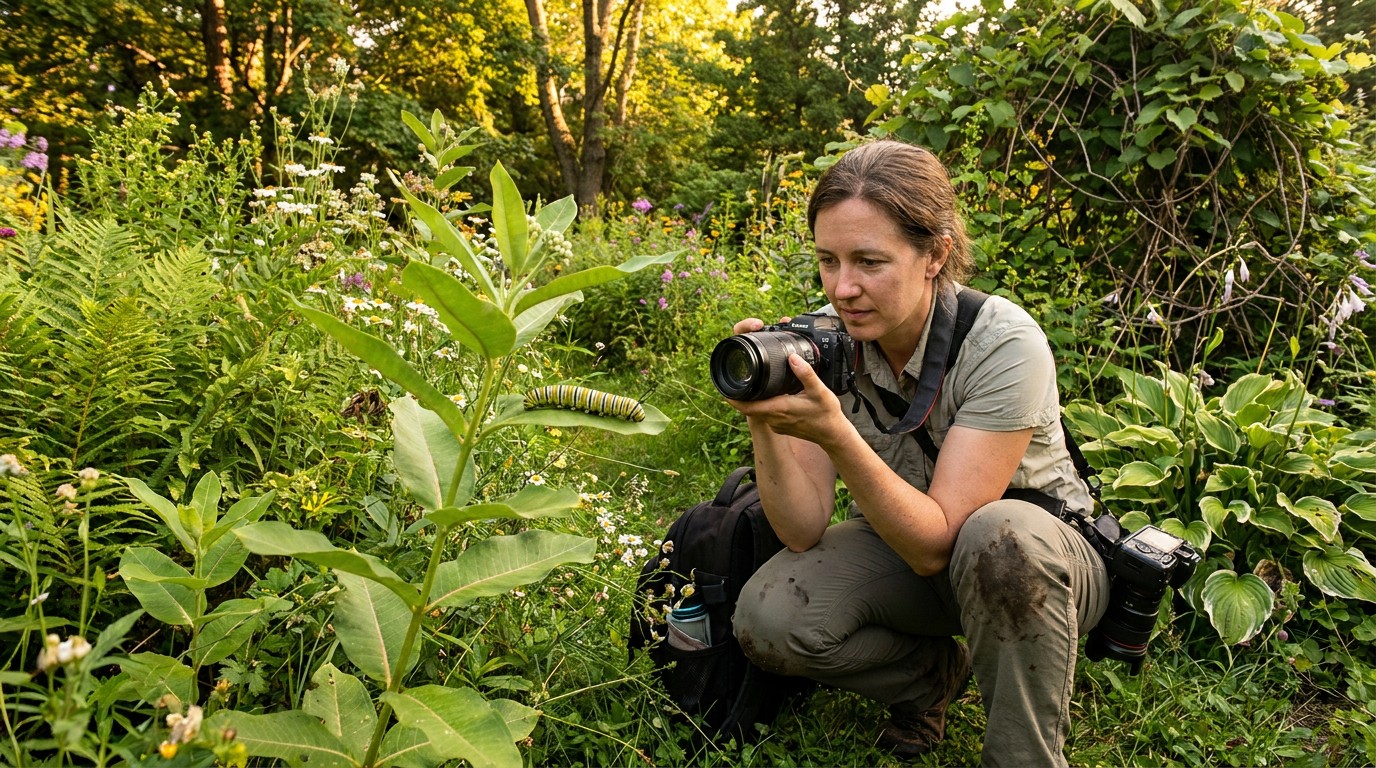
One of the most underrated strategies for how to identify caterpillars is paying close attention to where exactly you found them. Caterpillars are notoriously picky eaters, and the vast majority of species are closely associated with specific host plants or plant families. This relationship is so reliable that entomologists routinely use it as a primary identification tool. If you find a caterpillar munching on milkweed, there is an excellent chance you are looking at a monarch butterfly larva or one of a small handful of other milkweed specialists. A caterpillar on a tomato or pepper plant in a vegetable garden is very likely the tomato hornworm (Manduca quinquemaculata) or the closely related tobacco hornworm. Caterpillars found on oak trees could be any of dozens of species, including the striking polyphemus moth larva or various prominent moth species. Willow, aspen, and poplar trees support iconic species like the viceroy butterfly caterpillar, which bears a striking resemblance to the mourning cloak larva. Aquatic habitats even host a few caterpillar species, such as the aquatic moth larvae of the family Crambidae. Habitat type also matters more broadly: forest caterpillars differ significantly from those found in meadows, coastal dunes, or alpine zones. If you find a caterpillar in a specific region of the country, that geographic context immediately rules out hundreds of species and focuses your search considerably. Combining host plant data with visual characteristics is one of the fastest paths to a confident identification, especially for common garden species.
Use IdentifyThis.app to Identify Any Caterpillar Instantly
Even with all the knowledge in this guide, there will be moments when you encounter a caterpillar that simply stumps you. The color seems right but the markings do not match any photo you can find. The habitat narrows it down to a dozen possibilities. That is exactly where technology steps in to help. IdentifyThis.app offers a dedicated caterpillar identification tool at identifythis.app/identify-this-caterpillar that makes the entire process fast, accurate, and accessible to anyone — no entomology degree required. Simply snap a clear photo of the caterpillar you have found, upload it to the tool, and within seconds you will receive a detailed identification complete with the species name, information about the adult butterfly or moth it will become, its host plants, geographic range, and whether it poses any risk to humans or plants. The AI-powered identification engine is trained on thousands of caterpillar species from North America, Europe, and beyond, giving it an impressive ability to distinguish between look-alike species that would challenge even experienced naturalists. The tool is particularly useful for parents who want to quickly check if the caterpillar their child just picked up is safe, for gardeners trying to determine whether an infestation needs attention, and for educators who want to engage students with real-time nature discovery. IdentifyThis.app is free to use and requires no account or download — just visit the caterpillar identification page directly from your mobile browser while you are still outdoors with the creature in front of you. Combining the foundational knowledge from this guide with the power of IdentifyThis.app gives you the best of both worlds: understanding and speed.
Common Caterpillars You Are Likely to Encounter and How to Identify Them
To put all the identification advice in this guide into practical context, here is a rundown of some of the most frequently encountered caterpillar species and their key identifying features. The woolly bear caterpillar (Pyrrharctia isabella) is perhaps the most recognized caterpillar in North America — it has a dense, bristly coat of black hairs at both ends and a rusty-orange band in the middle. Despite folk legends, the width of the orange band does not actually predict winter severity. The monarch butterfly caterpillar (Danaus plexippus) is unmistakable with its bold yellow, black, and white horizontal banding and a pair of black filaments at both head and tail. It is almost exclusively found on milkweed. The tomato hornworm (Manduca quinquemaculata) is a massive green caterpillar up to four inches long with white chevron markings and a prominent rear horn — an impressive but harmless garden visitor. The saddleback caterpillar (Acharia stimulea) is a striking species with a brown body and a bright green saddle-shaped marking centered on the back, but beware: its spines deliver a painful sting. The eastern tiger swallowtail caterpillar (Papilio glaucus) is bright green with two large eyespots behind the head that mimic a snake's face — one of nature's most effective bluffs. The fall webworm (Hyphantria cunea) is a pale caterpillar covered in long white hairs, often found inside the communal silk webs it spins over tree branches in late summer and autumn. Familiarizing yourself with these common species provides a mental reference library that makes identifying new caterpillars much faster.
Safety Tips When Handling and Observing Caterpillars
Now that you know how to identify caterpillars, it is important to handle them — or choose not to handle them — with care. The golden rule is simple: if you cannot confidently identify a caterpillar, do not touch it with bare hands. Spiny or bristly caterpillars in particular should be treated with respect. The stinging rose caterpillar, the io moth larva, the buck moth caterpillar, and the puss caterpillar (arguably the most venomous caterpillar in North America) all carry urticating hairs or hollow spines connected to venom glands. Contact with these species can cause anything from mild itching and a rash to intense burning pain, swelling, and in rare cases, systemic reactions requiring medical attention. If you do want to observe a caterpillar closely, use a stick or a leaf to gently coax it onto a surface rather than picking it up directly. For photography purposes, this approach also tends to give you better positioning and cleaner shots. When conducting a garden inspection for caterpillar pests, wear gardening gloves as a precaution. If you want to raise a caterpillar to observe its metamorphosis — a truly magical experience — research its specific host plant requirements first, ensure it has fresh foliage daily, and use a well-ventilated container to prevent mold. Always release the adult butterfly or moth near the habitat where you originally found the larva. Respecting these creatures as living organisms, not just curiosities, ensures a rewarding experience for both you and the insect.
Try It Now on IdentifyThis.app
Use our free AI-powered tool to how to identify caterpillars instantly.
Try Free NowFrequently Asked Questions
What is the easiest way to identify a caterpillar I found in my garden?
The easiest way to identify a caterpillar you found in your garden is to take a clear, well-lit photograph from the side and top, note the plant it was feeding on, and then use an identification tool like the one at identifythis.app/identify-this-caterpillar. The combination of visual details and host plant information almost always leads to a quick, accurate result. For common garden caterpillars like the tomato hornworm, cabbage looper, or imported cabbageworm, even a basic web search with a good photo description will often do the trick.
Are hairy caterpillars dangerous to touch?
Not all hairy caterpillars are dangerous, but many should be avoided out of caution. Species like the woolly bear caterpillar are soft and harmless, while others such as the puss caterpillar, io moth larva, and buck moth caterpillar have spines or hairs capable of delivering venomous stings that can cause significant pain, rashes, and swelling. As a general rule, if you cannot positively identify a hairy or spiny caterpillar, it is best not to handle it with bare skin. Use gloves or a stick instead.
How can I tell if a caterpillar will become a butterfly or a moth?
Unfortunately, there is no single physical rule that reliably distinguishes butterfly caterpillars from moth caterpillars just by looking at the larva. Both groups produce caterpillars that can be smooth, hairy, colorful, or cryptic. The most reliable approach is to identify the species first, then look up whether the adult is a butterfly or moth. That said, some patterns exist: many famously hairy caterpillars like woolly bears become moths, while the distinctive banded caterpillars found on milkweed become monarch butterflies. Using an identification app or field guide that lists both the larval and adult forms is the most reliable approach.
How do I identify a caterpillar by color alone?
Color is a useful starting clue but should never be used alone, as many unrelated caterpillar species share similar colors. Start with color to create a short list of possibilities, then refine based on other features: body texture (smooth, hairy, spiny), pattern (stripes, spots, bands), the presence of horns or eyespots, the host plant, and your geographic location. For example, a green caterpillar with a rear horn on a tomato plant in North America is almost certainly a tomato hornworm, while a green caterpillar with white stripes on a wild cherry tree might be a tiger swallowtail larva. Combining color with these additional clues dramatically improves accuracy.
What time of year is best for finding and identifying caterpillars?
Caterpillars can technically be found year-round in warmer climates, but the peak season in most temperate regions of North America and Europe is late spring through early autumn, roughly from May through September. Late summer — July and August — tends to be the most productive time, as many species have hatched from spring egg deposits and are in their final larval instars before pupating. Different species peak at different times, so broadening your search across the season increases the variety you will encounter. Early spring is great for overwintered species that resume feeding, while autumn brings large caterpillars like the woolly bear preparing to overwinter before completing metamorphosis the following spring.