How to Identify Poisonous Mushrooms: A Complete Safety Guide for Foragers
Why Knowing How to Identify Poisonous Mushrooms Could Save Your Life
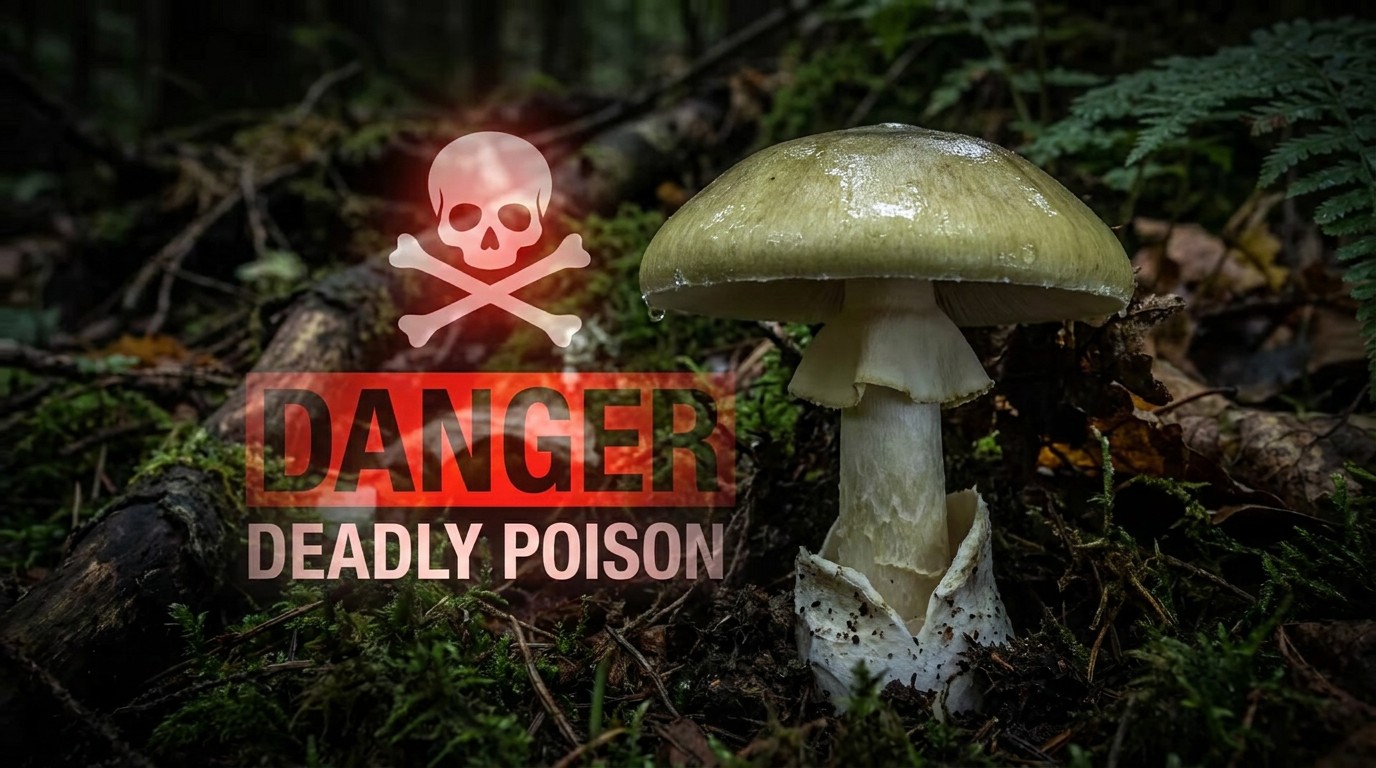
Knowing how to identify poisonous mushrooms is not just a useful skill — it is a potentially life-saving one. Every year, thousands of people around the world are hospitalized due to mushroom poisoning, and a significant number of those cases result in liver failure, organ damage, or death. The danger is not limited to reckless foragers; even experienced mushroom hunters have fallen victim to deadly look-alikes that closely resemble edible species. Mushrooms like the Death Cap (Amanita phalloides) and the Destroying Angel (Amanita bisporigera) are responsible for the majority of fatal mushroom poisonings globally, yet they can look deceptively harmless — or even appetizing — to the untrained eye. Whether you are a seasoned forager, a nature enthusiast, or a curious hiker, understanding the key markers that distinguish toxic mushrooms from safe ones is an essential piece of knowledge. This guide will walk you through everything you need to know, from visual warning signs to scientific identification methods, so you can explore the natural world with confidence and safety.
The Most Dangerous Poisonous Mushrooms You Need to Know
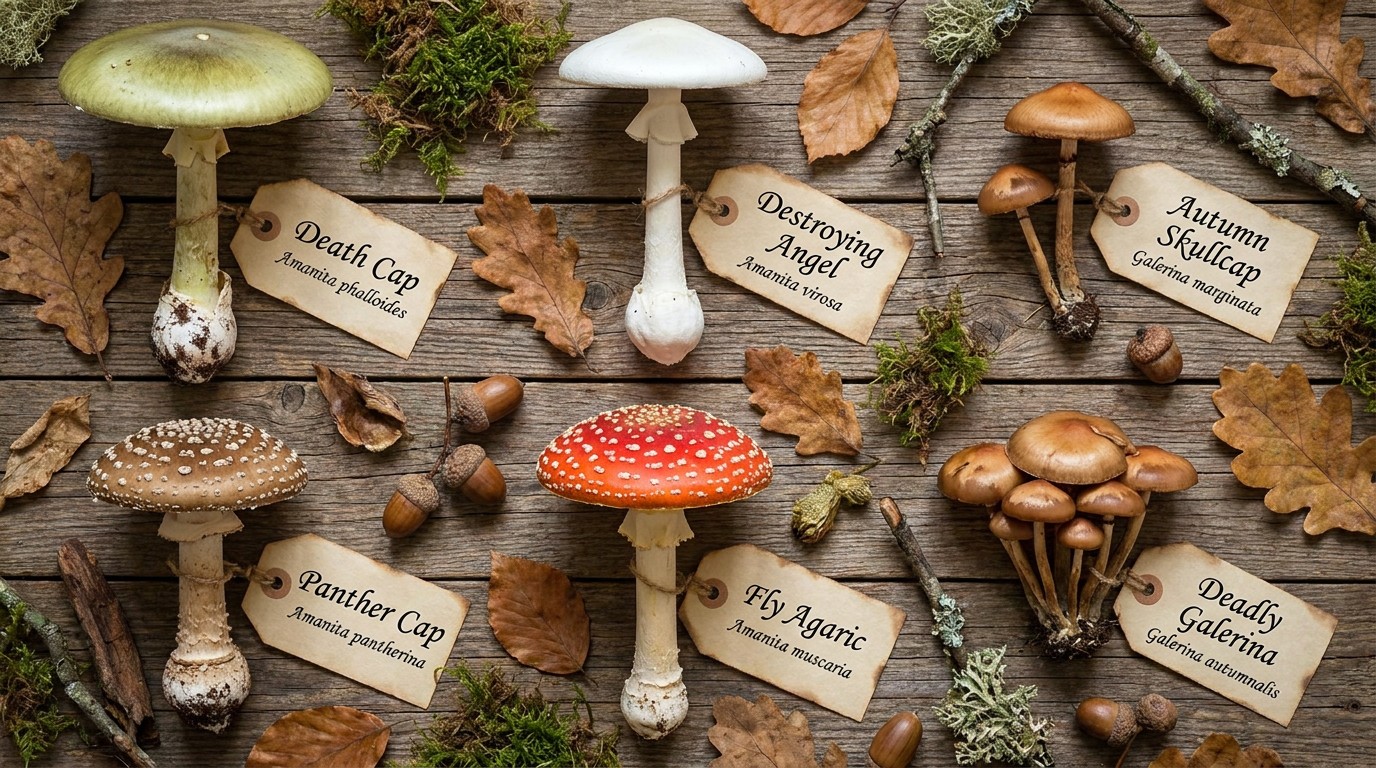
Before diving into identification techniques, it helps to know your adversaries. The Death Cap (Amanita phalloides) is widely considered the world's most deadly mushroom, responsible for approximately 90% of all mushroom-related fatalities worldwide. It contains amatoxins that destroy liver and kidney cells, and symptoms may not appear until 6–24 hours after ingestion — long after the toxins have begun their damage. The Destroying Angel (Amanita bisporigera) is equally lethal and shares the same toxic compounds. The Autumn Skullcap (Galerina marginata) is a small, brown mushroom that is frequently mistaken for edible species like honey mushrooms. Fool's Webcap (Cortinarius rubellus) contains orellanine, a toxin that causes delayed kidney failure, sometimes not presenting symptoms for weeks. The Panther Cap (Amanita pantherina) contains muscimol and ibotenic acid, causing severe neurological symptoms. The Jack-o'-Lantern mushroom (Omphalotus olearius) glows faintly in the dark and is often confused with chanterelles. Understanding what these species look like — their colors, textures, gill structures, and growth habits — is the first major step in learning how to identify poisonous mushrooms in the wild.
Key Visual Signs to Help Identify Poisonous Mushrooms
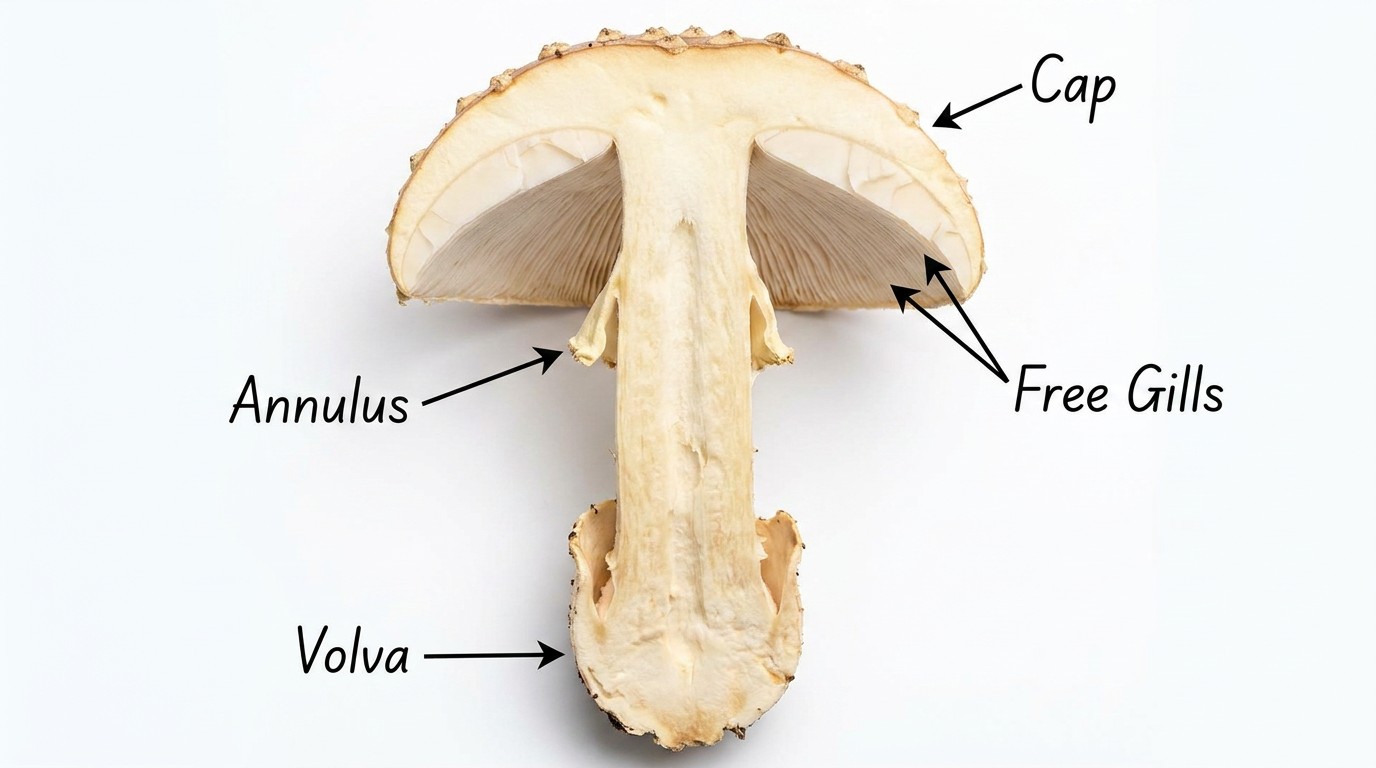
Learning how to identify poisonous mushrooms visually requires attention to several distinct physical characteristics. First, examine the cap: color, shape, texture, and size all matter. Many deadly mushrooms have pale, white, or greenish caps, though color alone is never a reliable indicator since it varies with age, moisture, and lighting. Second, look at the gills — the thin, blade-like structures under the cap. Poisonous Amanita species typically have free gills that do not attach to the stem, while many edible mushrooms have attached or decurrent gills. Third, check for a volva, which is a cup-like structure at the base of the stem where it meets the soil. This is a hallmark feature of the deadly Amanita genus and is often buried underground, so always dig carefully around the base when in doubt. Fourth, look for a ring or skirt (called an annulus) around the upper part of the stem — another common Amanita feature. Fifth, examine the spore print color by placing the cap gill-side down on paper for several hours. White spore prints are common among toxic Amanita species, while rusty-brown prints may suggest Galerina. Remember, no single feature confirms a mushroom is safe or poisonous — always evaluate the full picture, and when uncertain, do not eat it.
Common Myths About Identifying Poisonous Mushrooms — Debunked
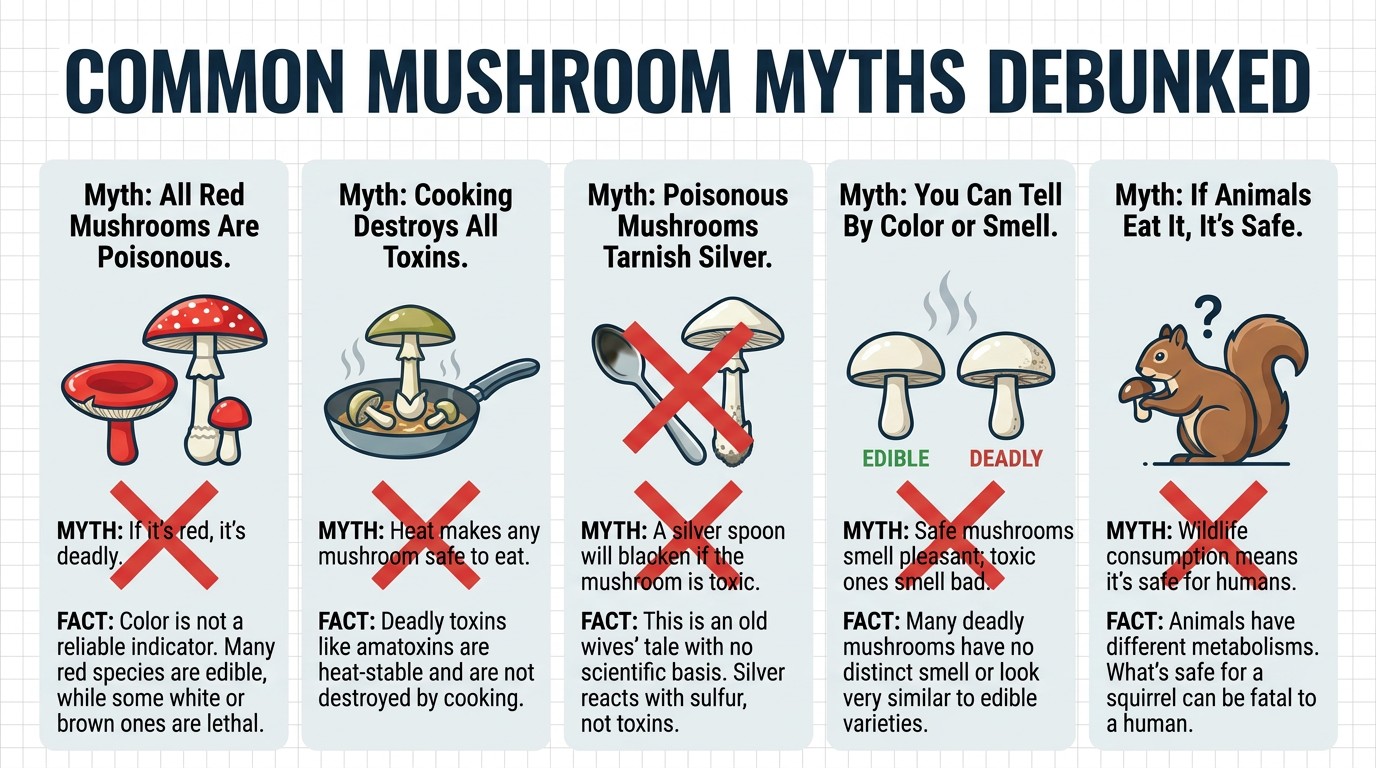
There are many dangerous myths that circulate among amateur foragers about how to identify poisonous mushrooms, and believing them could cost you your life. Myth #1: 'If animals eat it, it's safe for humans.' False. Squirrels and slugs can consume mushrooms that are highly toxic to humans without any ill effects, thanks to different metabolic systems. Myth #2: 'Poisonous mushrooms taste bitter or bad.' Entirely false. The Death Cap reportedly has a pleasant, mild taste — making it all the more deadly because victims do not realize anything is wrong until symptoms begin. Myth #3: 'Silver turns black when it touches a poisonous mushroom.' This is complete folklore with no scientific basis. Myth #4: 'Cooking or boiling destroys mushroom toxins.' While heat does destroy some toxins, the amatoxins found in Amanita species are heat-stable and remain fully active even after thorough cooking. Myth #5: 'Mushrooms with peeling caps are safe.' Edibility and the ability to peel a cap are entirely unrelated characteristics. These myths have persisted for generations and continue to cause harm. The only reliable ways to identify a mushroom are through rigorous scientific methods, expert consultation, or trusted AI identification tools — not folk wisdom.
How to Use Scientific Methods to Identify Poisonous Mushrooms
Professional mycologists rely on a combination of morphological analysis, spore prints, chemical spot tests, and increasingly, DNA barcoding to accurately identify mushroom species. For the everyday forager, morphological analysis remains the most accessible approach. This involves systematically examining every physical feature of a mushroom: the cap shape, surface texture, color, and size; the gill attachment, color, spacing, and whether they have edges; the stem shape, color, hollow or solid interior, surface texture, presence or absence of a ring or volva; the flesh color and whether it changes when cut or bruised; the smell (some poisonous mushrooms have distinctive odors); and habitat including what trees or substrate the mushroom is growing on. Many toxic species have specific mycorrhizal relationships — the Death Cap, for example, is commonly found near oak, pine, and chestnut trees. Spore prints are a valuable supplementary tool: place the cap gill-side down on paper (use both white and dark paper for clarity) and leave it for 4–8 hours. The color of the resulting spore deposit can help narrow down the genus. Chemical spot tests using reagents like Melzer's or KOH are used by experienced foragers to test spore ornamentation and tissue reactions, but these require expertise and proper materials. When in doubt, consult a local mycological society — many offer free identification events where experts can examine your specimens in person.
Use IdentifyThis.app to Identify Poisonous Mushrooms Instantly
Technology has revolutionized the way we approach mushroom identification, and one of the most powerful tools available today is the AI-powered mushroom identifier at IdentifyThis.app. By visiting identifythis.app/identify-this-mushroom, you can upload a clear photograph of any mushroom you have found and receive an instant AI-assisted identification with information about whether the species is edible, toxic, or unknown. The tool analyzes multiple visual features simultaneously — something that takes even experienced foragers considerable time to do manually. It cross-references your image against a vast database of mushroom species, providing you with the most likely matches along with safety information, key identification features, and guidance on what to do next. This is especially valuable in situations where you are unsure about a mushroom your child has touched or that has ended up in a basket of otherwise safe foraged specimens. While the AI tool is remarkably accurate and improves with every use, it is important to understand that it should be used as a powerful first-pass tool and supplement to — not a complete replacement for — expert verification when dealing with mushrooms you plan to eat. Think of it as having a knowledgeable mycologist in your pocket, available 24/7, wherever your foraging adventures take you. The combination of AI identification, good field practices, and this guide gives you a robust, multi-layered approach to safe mushroom foraging.
Practical Safety Tips for Foragers: How to Stay Safe in the Field
Knowing how to identify poisonous mushrooms is only part of staying safe — good field practices are equally important. First and foremost, adopt the golden rule of foraging: when in doubt, throw it out. No mushroom meal is worth risking your life over. Start by learning a small number of species extremely well before expanding your repertoire. Beginners are often advised to start with distinctive, easy-to-identify species with few dangerous look-alikes, such as giant puffballs, chicken-of-the-woods, or morels. Always forage with at least one other person, and let someone know where you are going. Carry a quality field guide specific to your geographic region, since mushroom species vary significantly by location and biome. Use separate bags for different species to avoid cross-contamination. Never eat a mushroom raw in the field; always bring specimens home for thorough identification before cooking. Photograph every mushroom you find from multiple angles — top, underside, base, and cross-section — before picking it, as the environment and substrate provide important clues. Keep samples in the refrigerator, not in sealed plastic bags, until you have completed your identification. If you or someone else ingests a potentially poisonous mushroom, call Poison Control immediately (1-800-222-1222 in the US), bring a sample or photograph of the mushroom to the hospital, and do not wait for symptoms to appear. Time is critical in mushroom poisoning cases, and early medical intervention dramatically improves outcomes.
Try It Now on IdentifyThis.app
Use our free AI-powered tool to how to identify poisonous mushroom instantly.
Try Free NowFrequently Asked Questions
What is the easiest way to identify a poisonous mushroom in the wild?
The easiest and most reliable way to identify a poisonous mushroom in the wild is to use a combination of visual identification methods and modern AI tools. Look for key danger signs such as a white or pale greenish cap, a cup-like volva at the base of the stem, free gills that do not attach to the stem, a ring around the upper stem, and a white spore print. These features are hallmarks of deadly Amanita species. For instant assistance in the field, uploading a clear photo to identifythis.app/identify-this-mushroom can give you rapid AI-powered identification with safety information. However, always confirm with an expert before consuming any wild mushroom.
Can you tell if a mushroom is poisonous just by looking at it?
While visual inspection is an important part of learning how to identify poisonous mushrooms, it is not always sufficient on its own. Many deadly mushrooms closely resemble edible species, and some factors like lighting, age, and moisture can change a mushroom's appearance significantly. Visual identification should always be paired with additional checks such as spore printing, examination of the base and stem, habitat analysis, and cross-referencing with a trusted field guide or AI identification tool. Experienced foragers use multiple data points simultaneously rather than relying on any single visual cue.
What should I do if I accidentally eat a poisonous mushroom?
If you suspect you have eaten a poisonous mushroom, act immediately — do not wait for symptoms to appear. Call your regional Poison Control Center right away (in the US, the number is 1-800-222-1222). If possible, bring the mushroom or a photograph of it to the emergency room, as species identification helps doctors determine the appropriate treatment. Symptoms of serious mushroom poisoning, such as those caused by Amanita species, can be delayed by 6–24 hours, giving a false sense of security. Liver-damaging toxins like amatoxins begin their destruction before any symptoms are felt, which is why immediate medical attention is critical regardless of how you feel in the hours after ingestion.
Are there any poisonous mushrooms that look exactly like edible ones?
Yes, several deadly mushrooms are very difficult to distinguish from popular edible species without careful, systematic examination. The Autumn Skullcap (Galerina marginata) closely resembles honey mushrooms and some other edible brown-capped species. The Jack-o'-Lantern mushroom is frequently mistaken for golden chanterelles. The Destroying Angel can look similar to button mushrooms when young and still enclosed in its veil. The Deadly Dapperling (Lepiota brunneoincarnata) resembles several edible Lepiota species. This is precisely why systematic identification using every available feature — not just a quick visual glance — is essential, and why tools like the AI identifier at identifythis.app/identify-this-mushroom are so valuable for providing a detailed species-level analysis.
Is the AI mushroom identifier on IdentifyThis.app accurate enough to use for foraging safety?
The AI mushroom identifier at identifythis.app/identify-this-mushroom is a powerful, highly capable tool that can identify hundreds of mushroom species with impressive accuracy. It analyzes multiple visual features in your photograph and cross-references them against an extensive species database, making it far more reliable than many folk methods or casual observation. That said, no AI identification tool — or human expert, for that matter — should be treated as the sole authority when it comes to eating wild mushrooms. Image quality, unusual angles, and immature specimens can all affect accuracy. The best practice is to use the app as a strong first-pass identification tool alongside a regional field guide, spore print analysis, and ideally confirmation from a local mycological society before consuming any foraged mushroom.