Identify This Mushroom: The Complete Guide to Safe and Accurate Mushroom Identification
Why You Need to Identify This Mushroom Before You Pick It
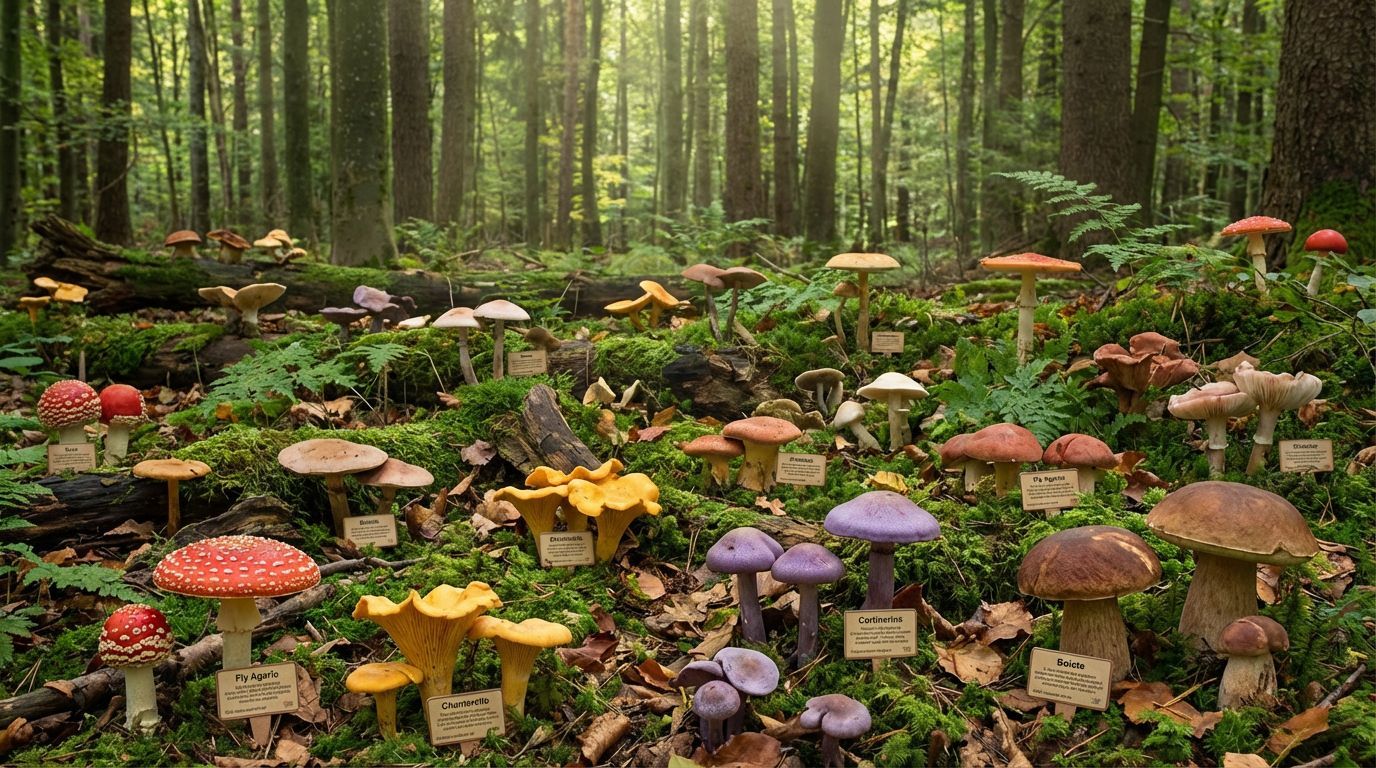
Every year, thousands of people around the world are hospitalized — and some tragically die — from eating misidentified mushrooms. The stakes could not be higher when it comes to wild mushroom foraging. Whether you stumbled across a beautiful cluster of fungi in the woods, spotted an unusual growth in your backyard, or are just beginning your journey into mycology, the ability to correctly identify this mushroom before consuming or handling it is absolutely essential. Mushrooms occupy a fascinating and sometimes deadly corner of the natural world. Some species, like the golden chanterelle or the beloved porcini, are culinary treasures. Others, like the Death Cap (Amanita phalloides) or the Destroying Angel (Amanita bisporigera), can cause fatal liver failure even in small amounts. The problem is that many deadly mushrooms look deceptively similar to edible ones. A trained eye, the right tools, and reliable resources are your best defense against making a costly mistake. This guide will walk you through everything you need to know about mushroom identification — from understanding key visual features to using modern AI-powered tools that can help you identify this mushroom in seconds.
Key Features to Look For When You Identify This Mushroom
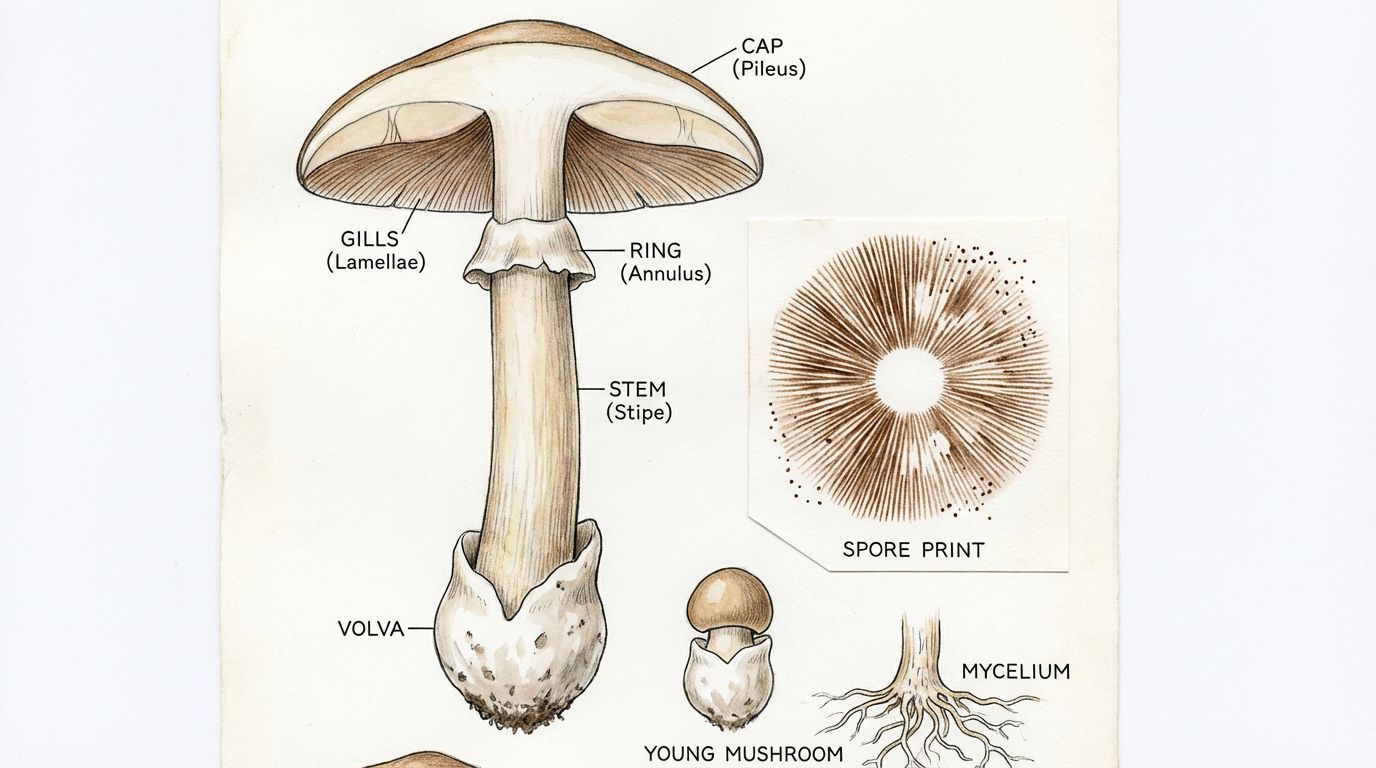
Successful mushroom identification is built on careful observation of multiple physical characteristics. No single feature is enough on its own — experienced foragers and mycologists always look at the complete picture before drawing a conclusion. Here are the most important features you should examine. First, study the cap: note its color, shape, texture, and size. Is it smooth, scaly, slimy, or dry? Does it have concentric rings or a distinct bump in the center called an umbo? Next, examine the underside of the cap. Mushrooms can have gills, pores, teeth, or ridges underneath — this is one of the most critical distinguishing features. Gills can be free, attached, or decurrent (running down the stem), and their color, spacing, and texture all matter. The stem, or stipe, deserves close attention too. Look for a ring, known as an annulus, which is a remnant of the partial veil that once covered the gills. Check for a volva, or cup-like structure at the base — this is a telltale sign of the deadly Amanita genus. The flesh of the mushroom is also informative: does it change color when cut or bruised? Does it exude latex? What does it smell like? Earthy, sweet, fishy, or chemical odors can all be diagnostic clues. Finally, take a spore print by placing the cap gill-side down on paper for several hours. The resulting color — white, brown, black, pink, purple-brown — is one of the most reliable identification tools available to amateur foragers.
Common Edible Mushrooms vs. Their Deadly Lookalikes
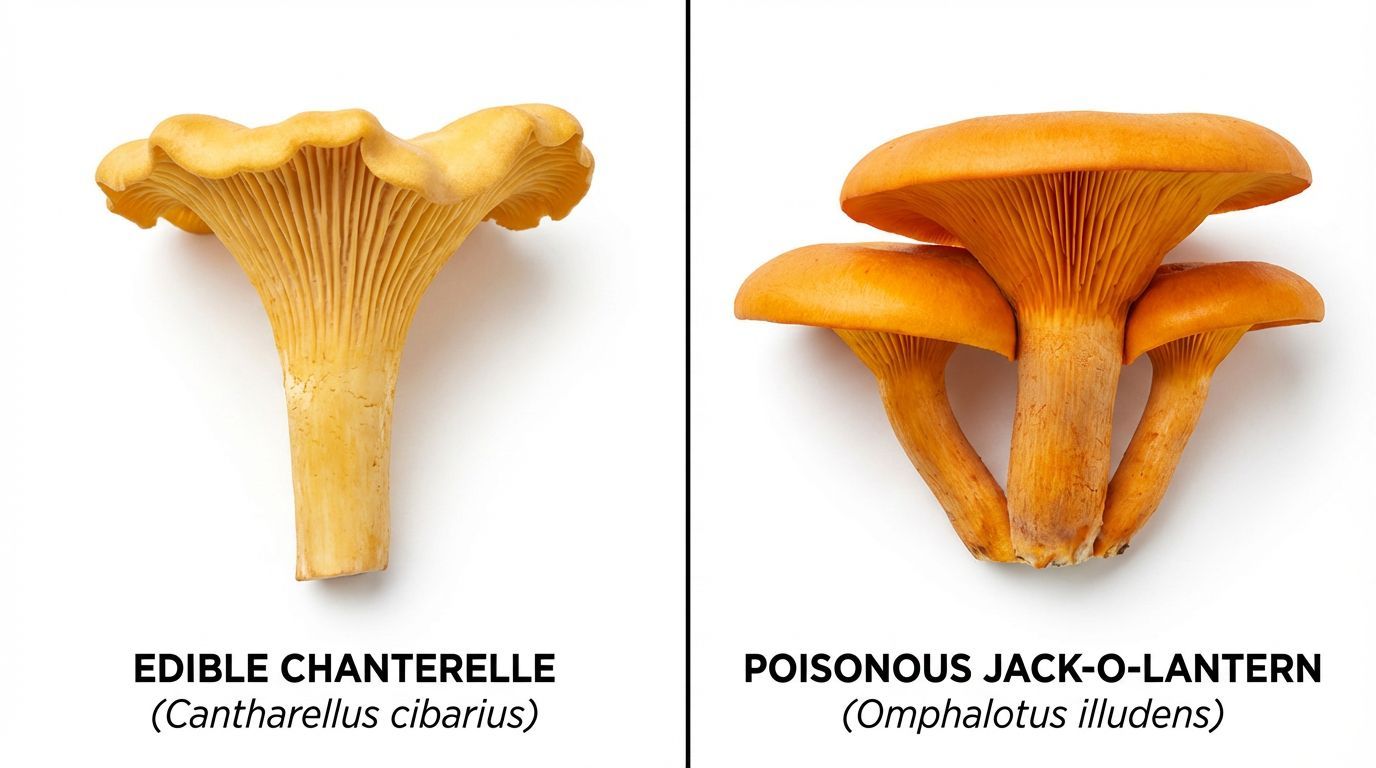
One of the most dangerous aspects of wild mushroom foraging is the existence of deadly lookalikes that closely mimic popular edible species. Understanding these toxic twins is critical before you attempt to identify this mushroom for the dinner table. The Chanterelle (Cantharellus cibarius) is one of the most prized edible mushrooms in the world, golden-yellow and delicious. However, it is often confused with the Jack-o'-Lantern mushroom (Omphalotus olearius), which causes severe gastrointestinal distress. The key difference? True chanterelles have forking, blunt-edged false gills, while Jack-o'-Lanterns have true, sharp, crowded gills and grow in dense clusters at the base of trees. The Hen of the Woods (Grifola frondosa) is another popular edible that can be confused with toxic bracket fungi. Morels (Morchella species) are celebrated spring mushrooms, but they have a dangerous lookalike in the False Morel (Gyromitra esculenta), which contains a compound that can be converted into a toxic hydrazine derivative in the body. Perhaps the most critical comparison is between the Paddy Straw mushroom (Volvariella volvacea) — popular in Asian cuisine — and the Death Cap. Both have a similar young button stage, and numerous fatalities have occurred among immigrant communities who misidentified Death Caps as edible straw mushrooms. This comparison alone illustrates why modern, reliable tools to identify this mushroom are not just convenient — they can be life-saving.
How Technology Is Changing the Way We Identify This Mushroom
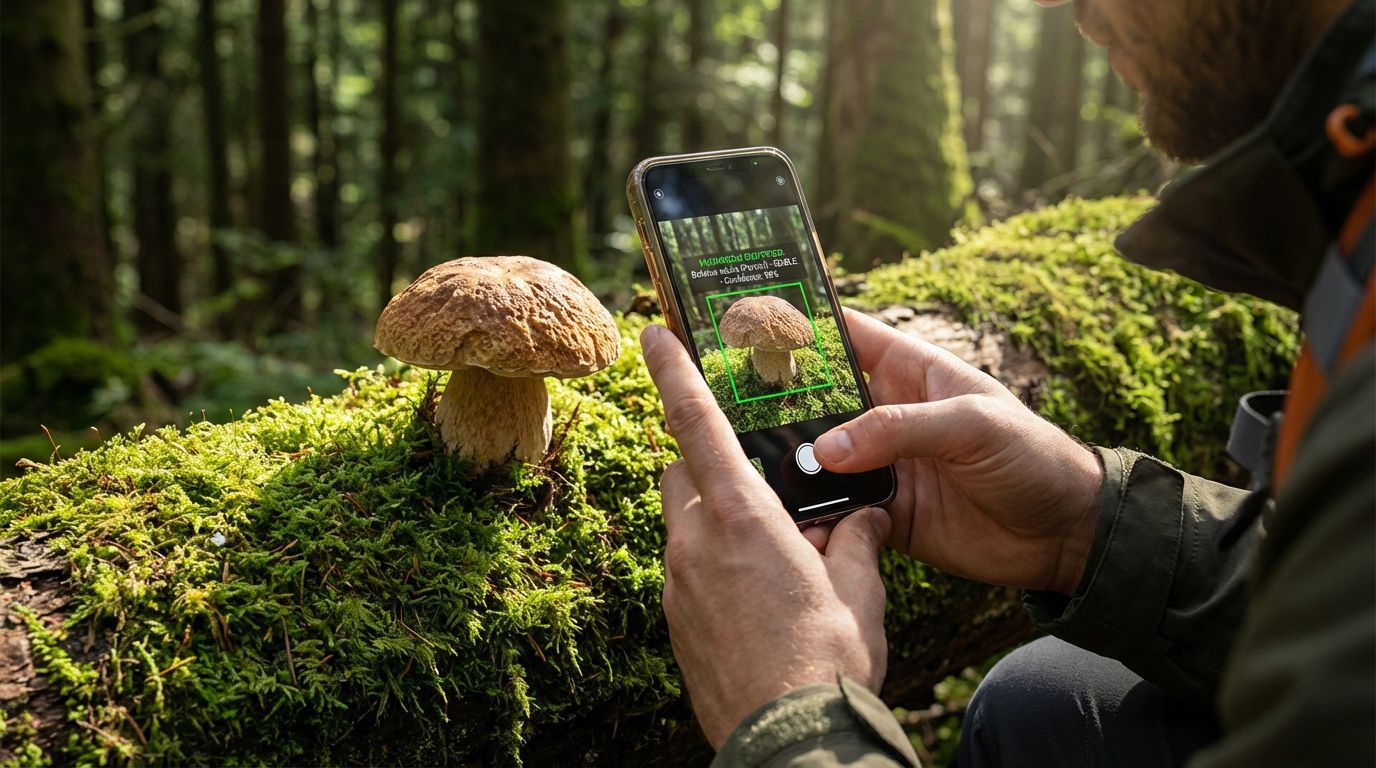
The science of mycology has traditionally been the domain of experts armed with field guides, microscopes, and decades of experience. But technology is rapidly democratizing mushroom identification, making it accessible to casual hikers, curious gardeners, and aspiring foragers alike. AI-powered image recognition tools have made enormous strides in recent years, and mushroom identification apps now use sophisticated machine learning models trained on millions of mushroom images to provide instant, accurate identification suggestions. These tools analyze visual patterns including color gradients, cap shape, gill structure, habitat context, and more — often providing results in just seconds. However, it is important to understand that even the best AI tools should be used as a starting point for identification, not the final word. The best practice is to use a reliable app to get a preliminary identification, then cross-reference with multiple field guides and, when in doubt, consult a local mycological society or expert before consuming anything. GPS and geographic data are also increasingly being integrated into mushroom ID tools, allowing apps to filter possible matches based on species known to grow in your specific region and season — dramatically improving accuracy. Community features, where experienced foragers can review and confirm AI identifications, add another valuable layer of verification. The convergence of AI, community knowledge, and geographic data is creating a new generation of tools that are genuinely transforming how people engage with wild mushrooms safely.
Use IdentifyThis.app to Identify This Mushroom Instantly
When you need a fast, reliable, and user-friendly solution to identify this mushroom, IdentifyThis.app is one of the best tools available online. The platform is specifically designed to make mushroom identification accessible to everyone — from complete beginners to experienced foragers looking for a second opinion. You can visit the dedicated mushroom identification page at identifythis.app/identify-this-mushroom to get started immediately. The process is simple: upload a clear photograph of the mushroom you have found, and the AI-powered engine will analyze the image and provide you with the most likely species matches, along with detailed information about each possibility. The tool considers visual features like cap color, shape, texture, and habitat cues visible in the image to generate accurate, ranked results. What sets IdentifyThis.app apart from many competitors is its commitment to safety-first identification. The platform does not just tell you what a mushroom might be — it also provides clear toxicity information, edibility ratings, and warnings about dangerous lookalikes associated with each identification result. This comprehensive approach means you are never left with just a name; you get the full context you need to make an informed decision. Whether you are out on a trail with your phone or sitting at home with a freshly foraged basket, identifythis.app/identify-this-mushroom gives you a powerful, free tool to help answer the question on every forager's mind. Remember, always use identification tools as one part of a broader identification process that includes physical examination, field guide cross-referencing, and expert consultation when needed.
Best Practices for Safe Mushroom Foraging and Identification
Even with the best technology at your fingertips, safe foraging requires discipline, knowledge, and a healthy respect for uncertainty. Here are the essential best practices every forager should follow. First, never eat a mushroom you cannot identify with absolute certainty from multiple independent sources. The rule of thumb among experienced foragers is: when in doubt, throw it out. Second, learn your local species before attempting to forage. The number of mushrooms you need to master is manageable if you focus on your specific geographic region and season. Join a local mycological club — most regions have amateur foraging societies that organize guided walks, identification workshops, and expert-led events that are invaluable for hands-on learning. Third, always photograph a mushroom in situ before picking it, capturing multiple angles: the top of the cap, the underside, the stem base including any volva, and the surrounding habitat. These images are not only useful for running through an identification app — they create a record you can share with experts for confirmation. Fourth, use multiple identification resources simultaneously. Cross-reference what your app tells you against at least two reputable field guides specific to your region. Fifth, be aware that mushroom appearance can vary significantly based on age, weather conditions, and substrate — a mushroom that perfectly matches an illustration in a book when young may look quite different when mature or after heavy rain. Finally, never forage from polluted areas, roadsides, or industrial sites, as mushrooms are highly efficient bioaccumulators of heavy metals and environmental toxins.
Building Your Mushroom Identification Skills Over Time
Becoming proficient at mushroom identification is a rewarding long-term journey that deepens your connection to the natural world. While apps and field guides are essential starting tools, there is no substitute for accumulated hands-on experience. The more time you spend observing mushrooms in their natural habitat across different seasons and conditions, the more intuitive identification becomes. Start by mastering a small number of foolproof species — mushrooms that have no deadly lookalikes and are easy to identify even for beginners. The Giant Puffball (Calvatia gigantea) is a popular starting point: when white all the way through on the inside, it has no dangerous lookalikes. Chicken of the Woods (Laetiporus sulphureus) is another beginner-friendly choice, with its distinctive bright orange and yellow shelf formation and no dangerous doppelgangers. Keep a foraging journal where you record every mushroom you encounter, including photographs, location, habitat, date, and your identification notes. Over time, this personal database becomes one of your most valuable resources. Consider attending formal mycology courses offered by universities, botanical gardens, and natural history museums — these provide structured learning with expert guidance that significantly accelerates your skills. Engage with the online mycology community through forums, social media groups, and platforms where experts freely share knowledge. And always use technology as a supplement to, not a replacement for, genuine expertise. The combination of powerful tools like IdentifyThis.app and dedicated personal learning is what separates safe, successful foragers from those who take dangerous risks in the field.
Try It Now on IdentifyThis.app
Use our free AI-powered tool to identify this mushroom instantly.
Try Free NowFrequently Asked Questions
What is the safest way to identify this mushroom I found in the wild?
The safest approach is to use multiple identification methods simultaneously. Start by taking clear photographs from multiple angles and running them through a reliable identification tool like IdentifyThis.app. Then cross-reference the result with at least two regional field guides. Take a spore print, note the smell and texture of the flesh, and document the habitat where you found it. If you remain even slightly uncertain about the identification, do not eat it. Consulting a local mycological society or an experienced forager for in-person verification is always the gold standard before consuming any wild mushroom.
Can I use an app to identify this mushroom accurately?
AI-powered mushroom identification apps have become remarkably accurate and are an excellent first step in the identification process. Apps like those available at identifythis.app/identify-this-mushroom use machine learning models trained on vast image datasets to provide species matches within seconds. However, no app is 100% accurate 100% of the time, and apps should always be used as a preliminary tool rather than a definitive authority. Always cross-reference app results with field guides, take note of all physical characteristics, and consult human experts when the stakes involve eating an unconfirmed mushroom.
What are the most dangerous mushrooms to misidentify?
The most dangerous misidentification mistakes involve the Amanita genus. The Death Cap (Amanita phalloides) and Destroying Angel (Amanita bisporigera) are responsible for the majority of fatal mushroom poisonings worldwide. They are particularly dangerous because they taste pleasant, symptoms are delayed by 6-24 hours (by which time severe organ damage has begun), and they can resemble edible species like Paddy Straw mushrooms and button mushrooms. The False Morel (Gyromitra esculenta) is another highly dangerous species. Knowing these deadly mushrooms and their identifying features is as important as knowing edible species.
How do I take a good photo to identify this mushroom with an app?
To get the best results from a mushroom identification app, take multiple photographs in good natural lighting — avoid flash when possible as it can wash out important color details. Capture the top of the cap, a close-up of the underside showing gills, pores, or teeth, the full stem including the base and any ring or volva, and a wider context shot showing the habitat and substrate (soil, wood, leaf litter). Avoid blurry images or heavy shadows. Including something for scale, like a coin or finger, can also help the app assess size, which is sometimes an important diagnostic factor.
Is it safe to touch a mushroom I cannot identify?
In most cases, briefly touching an unidentified mushroom is not dangerous — mushroom toxins generally require ingestion to cause harm, and contact dermatitis from mushrooms is relatively rare. However, you should wash your hands thoroughly after handling any unknown mushroom, and avoid touching your face, eyes, or mouth before doing so. Some people can experience skin irritation from certain species. The real danger lies in consuming unidentified mushrooms, not handling them. That said, always exercise caution and never allow children or pets to handle wild mushrooms without supervision, as they are more likely to put things in their mouths.